
How Is a Five Element Bracelet Personalized by BaZi?
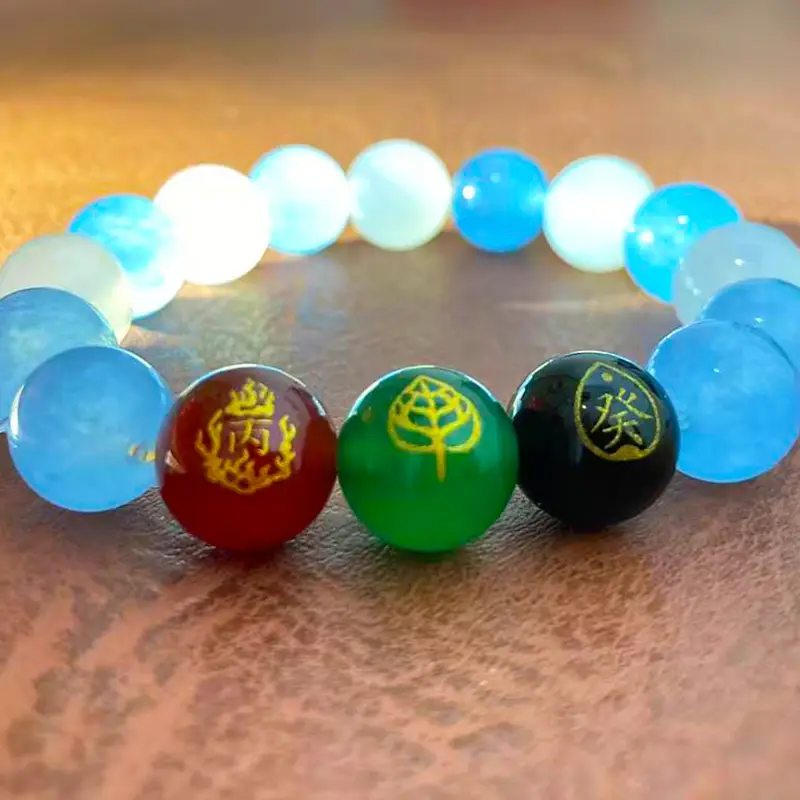
A personalized Five Element Bracelet is created by using traditional BaZi analysis to guide the selection of materials and elemental qualities for an individual. Rather than choosing crystals from a zodiac sign, favorite color, or missing-element chart, the process begins with the Four Pillars of birth and examines how the Five Elements function within the complete chart. Seasonal conditions, the Day Master, roots, structure, strength and weakness, and the chart’s balancing needs all influence the judgment. The bracelet’s materials should follow that analysis, not determine it. This is what gives a Five Element personalized bracelet a distinct purpose beyond a general crystal accessory.
What Actually Makes a Five Element Bracelet Personalized?
Personalization begins with a decision about the person, not the product. In traditional BaZi, the birth year, month, day, and hour form the Four Pillars. The Day Master is an important reference point, but it cannot tell the whole story by itself. Two people with the same Day Master may have different seasonal conditions, different roots, and different relationships among the elements. Their bracelet designs may therefore differ even when their charts appear similar at first glance.
For a custom five element bracelet, the practitioner first interprets the chart and determines which elemental relationships deserve attention. Only then should that judgment guide the selection of crystals, colors, and the overall arrangement. A material is not automatically appropriate because it is traditionally associated with a certain element; its role in the proposed design must make sense within the reasoning behind the recommendation.
This distinction is particularly important when buying a bracelet based on birth chart information online. Some sellers ask for a birth year and immediately recommend a ready-made design. That may be a general birth-year product, but it is not the same process as considering all four pillars. A genuinely personalized service should be able to explain what information was used and how it influenced the finished bracelet.
At LuckyAnyway, the intended approach to a personalized crystal bracelet is to connect the product with traditional Five Elements and BaZi principles, rather than relying only on fashionable stones or broad zodiac associations. The customer should understand the reasoning behind the design, not merely receive a list of crystals.
Why Must BaZi Analysis Come Before Choosing the Crystals?
Because the same element can play different roles in different charts. The Five Elements—Wood, Fire, Earth, Metal, and Water—are connected through relationships of generation and control. Traditional BaZi interpretation considers how these relationships operate under the conditions of a particular chart. It does not assume that every person benefits from adding whichever element appears least often.
A sound assessment considers seasonal adjustment (调候), roots (通根), chart structure (格局), strength and weakness (旺衰), and the underlying imbalance and remedy (病药). Further examination may involve the Seven Killings and interactions such as combinations, generation, control, clashes, punishment, harm, and other relationships. These considerations must be weighed in context rather than treated as a mechanical formula.
調候 deserves particular attention. It concerns the chart’s seasonal temperature and moisture conditions, while strength and weakness concern the Day Master’s position within the chart. They are related considerations, but they are not interchangeable. A chart may require attention to seasonal conditions even when a simple strength assessment seems straightforward. If a seller jumps directly from “strong Day Master” to a standard list of favorable elements, important distinctions may be overlooked.
For the customer, the practical question is not whether a seller can name the Five Elements. It is whether the seller can explain why a particular elemental direction was chosen for this chart. A personalized feng shui bracelet should follow a coherent assessment, rather than being assembled first and justified afterward.
How Do Different BaZi Factors Change the Design Decision?
There is no responsible universal recipe that assigns the same crystals to everyone with a particular Day Master. The chart must be read as a whole, and the design should reflect the conclusion of that reading. The following distinctions show why a custom feng shui bracelet cannot be reduced to a single label.
| BaZi Factor | What Is Examined | Why It Matters | Possible Design Implication | Mistake to Avoid |
|---|---|---|---|---|
| Seasonal adjustment (调候) | The chart’s temperature and moisture conditions | Seasonal needs may change the role of an element | Material choices may reflect the assessed seasonal need | Treating this as identical to strength and weakness |
| Roots (通根) | How the Day Master and other elements are rooted | Visible element counts alone may be misleading | The design follows the full elemental assessment | Judging strength only by the number of appearances |
| Chart structure (格局) | How the chart’s components form a working pattern | The same element may have different roles in different structures | The combination is chosen in light of the chart’s pattern | Applying a generic Day Master recipe |
| Strength and weakness (旺衰) | The Day Master’s position in the complete chart | It helps assess elemental relationships but is not the whole judgment | The proposed emphasis depends on the wider analysis | Assuming a strong chart always needs the same elements |
| Remedy (病药) | The particular imbalance and its appropriate response | It connects diagnosis with the reasoning for adjustment | The design follows the identified need, not a missing-element list | Choosing materials before identifying the issue |
This is why two personalized Five Element bracelets can look quite different while both follow a considered traditional method. The point is not to make every design visually unique for its own sake. It is to ensure that the material choices have a reason connected to the person’s chart.
Why Can Two People with the Same Day Master Need Different Bracelets?
The Day Master identifies the central element used to interpret the person in BaZi, but it does not describe the complete chart. The birth month establishes important seasonal conditions; the other pillars contribute roots and relationships; and combinations or clashes may alter how the elements operate. A label such as Wood Day Master or Metal Day Master is therefore the beginning of analysis, not the final product recommendation.
Consider two people whose Day Master is Metal. One chart may have conditions that call for attention to seasonal dryness, while another may have a different structure and a different balance of elemental relationships. Selecting both bracelets from a fixed “Metal people should wear these crystals” chart ignores the very differences that personalization is supposed to address.
The same caution applies to a Chinese birth element bracelet selected only from a birth year. Year-based associations can be meaningful within their own traditional context, but they cannot replace a full Four Pillars assessment. When a customer wants a bracelet personalized by BaZi, the design should be based on the actual chart rather than a convenient label.
To understand how an individual chart is interpreted, you can explore LuckyAnyway’s BaZi Analysis. The analysis provides the traditional context from which a more considered bracelet recommendation can be made.
How Are BaZi Findings Translated into Crystal and Color Choices?
Once the chart has been assessed, the next decision is how to translate the traditional judgment into a wearable design. This stage requires care because an elemental association is a starting point, not a substitute for the analysis. In commonly used Five Elements correspondences, Wood is associated with green, Fire with red, Earth with yellow or brown, Metal with white or metallic tones, and Water with black or dark blue. These associations can help organize a design, but color alone does not establish whether a bracelet suits a particular chart.
Materials are selected within the design’s overall intention. A practitioner may consider the traditional elemental associations of particular stones, the combination of materials, and how the bracelet is meant to express the result of the BaZi assessment. The objective is not to put every color on the wrist. It is to create a coherent arrangement that reflects the reasoning behind the selection.
There is also a difference between a material’s traditional association and a claim about its physical properties. A responsible custom five element bracelet service should explain the cultural and metaphysical basis of its choices without making medical promises or guaranteeing wealth, relationships, or career outcomes. The product can have a meaningful place in a traditional personal practice without being presented as a substitute for practical decisions.
When reviewing a proposed design, ask the seller to explain the combination as a whole. If the answer focuses entirely on a stone’s popularity, color, or broad marketing description, it may not tell you much about the chart-based reasoning. If the materials are explained in relation to a clearly stated traditional assessment, you have a better basis for deciding whether the design meets your expectations.
How Can You Judge Whether the Material Combination Makes Sense?
A well-considered design should connect three things: the conclusion of the BaZi assessment, the traditional associations of the chosen materials, and the finished bracelet. If one of these is missing, the product may still be attractive, but its claim to personalization becomes harder to evaluate.
For example, a seller might describe a bracelet as being designed for someone who needs a particular elemental influence. The next question should be why that influence was identified as useful. The explanation should relate to the person’s chart, not merely point out that the corresponding element is absent. After that, the proposed stones and their arrangement should be consistent with the stated purpose.
The following comparison can help you assess a personalized crystal bracelet before ordering.
| Design Detail | What to Examine | A Thoughtful Approach | A Weak Approach | Buyer Decision |
|---|---|---|---|---|
| Elemental emphasis | Why certain elements are emphasized | The choice follows the interpreted chart | The design simply fills an absent element | Ask what role the selected element serves |
| Stone selection | How each material fits the intended design | The explanation considers the combination | Each stone is sold with a generic benefit claim | Request the rationale for the complete arrangement |
| Color choice | Whether color is being used as a design aid or the entire method | Color supports a wider traditional assessment | Color alone determines the recommendation | Do not treat a color chart as a full reading |
| Bead arrangement | Whether the arrangement has a stated design purpose | The design reflects the intended elemental emphasis | The pattern is chosen without reference to the assessment | Check that the design matches the explanation |
| Personal preferences | How comfort and appearance fit the selection | Preferences are accommodated where appropriate | Appearance replaces the chart-based rationale | Discuss preferences before the design is finalized |
This does not mean every bead must come with a complicated explanation. It means the overall design should have a clear basis. Personalization is not measured by the number of stones, the complexity of the pattern, or the price of the bracelet. It is measured by whether the selection process genuinely reflects the person and the stated traditional method.
What Should You Confirm Before Ordering a Custom Five Element Bracelet?
Before you purchase, make sure you understand what the seller means by “custom.” Some products allow customers to choose a size or color, while others involve a recommendation based on birth-chart information. Both can be legitimate forms of customization, but they are not the same service.
First, confirm what information is needed for the BaZi assessment. If the birth hour is unknown or uncertain, ask how the practitioner handles that limitation. Second, ask whether the design is selected from a standard collection or created after reviewing your chart. Third, confirm the bracelet’s actual materials, size, and customization options. Finally, ask what wearing and care guidance is supplied with the finished piece.
A seller should be able to explain the process without pressuring you to buy immediately. Be cautious of absolute promises that a bracelet will guarantee wealth, eliminate every obstacle, or produce a particular result by a fixed date. Traditional practices have their own methods and interpretations; a commercial claim should not replace a careful explanation of those methods.
At the same time, do not judge a bracelet only by whether its explanation contains a long list of classical terms. Technical language can sound impressive without demonstrating sound reasoning. A more useful sign of experience is the ability to explain why the recommendation fits your chart in clear, consistent language—and to acknowledge where a judgment depends on interpretation.
If you want to explore designs created around Five Elements and BaZi principles, visit LuckyAnyway’s Five Element Collection. Reviewing the collection alongside an explanation of the customization process can help you ask more precise questions before choosing a bracelet.
Can a Personalized Five Element Bracelet Be Both Traditional and Practical?
Yes. A personalized bracelet does not need to be uncomfortable, visually complicated, or difficult to wear in order to reflect a traditional approach. The analysis guides the selection, while the finished piece still needs to suit the person’s wrist, daily routine, and preferences. Practical design is part of good craftsmanship, not a reason to abandon the traditional rationale.
For some customers, wearing a BaZi bracelet is a way to keep a connection with Chinese metaphysical traditions close to everyday life. Others approach it as part of a broader effort to understand their chart and make thoughtful adjustments in their lives. In either case, the item is most meaningful when the wearer understands why it was chosen rather than relying on a vague promise printed on a product page.
Traditional Chinese metaphysics treats a person’s circumstances as something to be understood in context. A personalized Five Element Bracelet can express that approach through a material selection based on the individual’s chart. It should not be presented as a replacement for sound judgment, effort, or responsibility, but as a wearable part of a considered personal practice.
Frequently Asked Questions
1. Is a personalized Five Element Bracelet based only on my Day Master?
No. The Day Master is an important part of BaZi analysis, but a proper interpretation considers the complete Four Pillars. Seasonal conditions, roots, structure, strength and weakness, and the chart’s elemental relationships may all affect the recommendation. A bracelet selected only from the Day Master label is a general recommendation, not necessarily a fully personalized one.
2. Does my bracelet need to include the element missing from my chart?
Not automatically. An element’s absence does not by itself establish that it should be added. The practitioner needs to determine how the element functions within the whole chart and whether it serves the intended traditional purpose. Ask for the reasoning behind the recommendation instead of choosing stones solely from an online missing-element calculation.
3. What is the difference between a BaZi bracelet and a general Five Element bracelet?
A general Five Element bracelet may use traditional elemental associations to create a culturally meaningful design. A BaZi bracelet is intended to take an individual’s birth chart into account when selecting the materials and elemental emphasis. The important distinction is the selection process. If you are paying for personalization, the seller should explain how the chart influenced the actual design.
A Personalized Bracelet Should Begin with a Reasoned Assessment
The value of a personalized Five Element Bracelet lies in the relationship between the BaZi analysis and the finished design. A birth-year label, a color preference, or a missing-element count may offer a simple starting point, but none can stand in for a considered reading of the full chart.
When choosing a custom five element bracelet, ask how the chart was interpreted, why the selected materials were chosen, and whether the final arrangement reflects that reasoning. These questions help you distinguish a personalized BaZi crystal bracelet from a generic product marketed with broad claims.
LuckyAnyway’s approach connects traditional Chinese metaphysical principles with a wearable design process. By understanding the reasoning before choosing the bracelet, you can make a more informed decision and select a piece whose traditional purpose is clear to you.
To learn more about the brand and its approach to Chinese traditional culture, visit the LuckyAnyway homepage.