
Why Your Zodiac Sign Is Not Enough to Choose a Five Element Bracelet
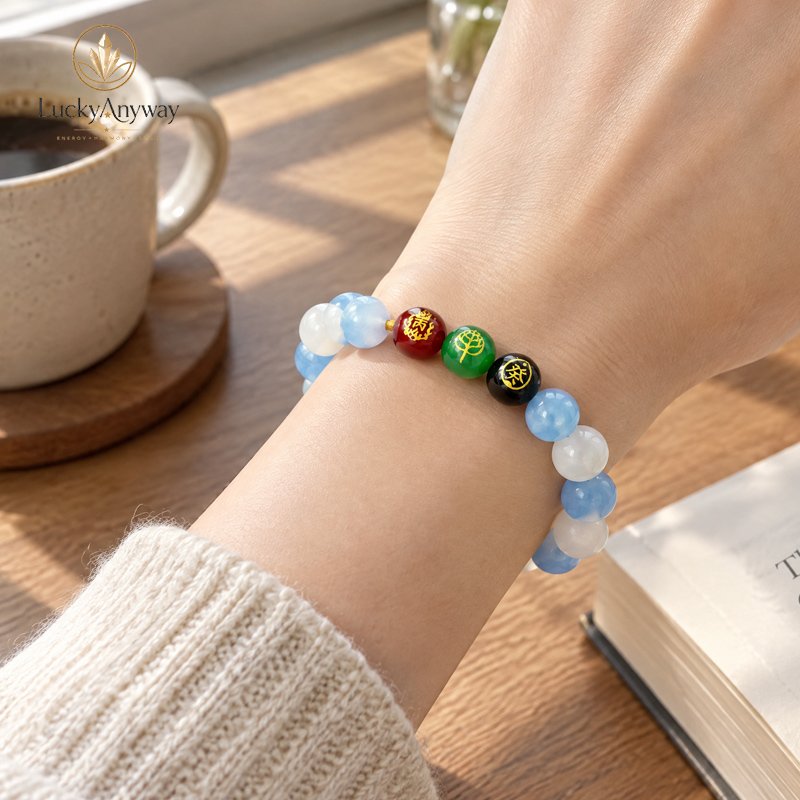
Your Chinese zodiac sign is not enough to determine which Five Element Bracelet is suitable for you. The zodiac sign comes from the year pillar of the traditional Chinese calendar, while BaZi analysis examines the year, month, day, and hour of birth and the relationships among all four pillars. Two people born under the same zodiac sign can have very different chart structures, seasonal conditions, and elemental needs. A zodiac bracelet can carry a meaningful traditional association, but a personalized Five Element Bracelet requires a more complete judgment. The important distinction is not whether zodiac symbolism has value, but whether it provides enough information to guide an individual selection.
What does your Chinese zodiac sign actually tell you?
Your Chinese zodiac sign identifies the animal associated with your birth year within the traditional twelve-branch cycle. Rat, Ox, Tiger, Rabbit, Dragon, Snake, Horse, Goat, Monkey, Rooster, Dog, and Pig are familiar cultural symbols, each connected with a branch and a wider body of traditional associations.
That makes the zodiac useful as an entry point into Chinese culture. It can guide the theme of a gift, represent a person’s birth year, or provide a familiar starting point for discussing traditional beliefs. A Chinese zodiac bracelet may be selected for these reasons, and there is no need to dismiss that choice. The problem begins when a year sign is treated as a complete personal diagnosis.
In BaZi, the year pillar is only one of four pillars. The month pillar reflects the seasonal context in which the chart is formed; the day pillar contains the Day Master, an important reference for interpreting the chart; and the hour pillar adds further information about the overall structure. The pillars interact through relationships that cannot be understood by looking at one animal alone.
Here is a distinction experienced practitioners pay attention to: the zodiac animal and the Day Master are not interchangeable. A person’s zodiac sign is associated with the Earthly Branch of the year pillar. The Day Master is the Heavenly Stem of the day pillar. They belong to the same chart, but they answer different questions. Knowing one does not automatically reveal the other.
So, if you are considering a zodiac five element bracelet, first decide what you want the bracelet to represent. If your intention is to honor your birth-year animal or choose a culturally meaningful gift, the zodiac may be a suitable guide. If you want the materials selected according to your individual Five Element pattern, year-sign information alone is not enough.
How is zodiac vs BaZi different when choosing a bracelet?
The practical difference is the depth of judgment. A zodiac-based product generally starts with the birth year and its associated animal or traditional symbolism. A BaZi bracelet begins with a chart that includes all four pillars and asks how the elements function in relation to one another.
Traditional BaZi interpretation does not simply count Wood, Fire, Earth, Metal, and Water and then add whichever element appears least often. The practitioner must consider seasonal adjustment (调候), roots (通根), chart structure (格局), strength and weakness (旺衰), and the chart’s specific imbalance and appropriate response (病药). These judgments are connected, and their order matters.
For example, an element may appear frequently in a chart without necessarily being the element that should be emphasized in a bracelet. Another element may be less visible but still have an important role through hidden stems or relationships among the pillars. A recommendation based only on the number of visible elements can therefore miss the actual pattern.
The distinction between 调候 and 旺衰 is especially important. 调候 considers seasonal conditions such as cold, heat, dryness, and moisture. 旺衰 examines the Day Master’s relative strength within the chart. These are related considerations, but they are not the same judgment. A chart cannot be understood properly by deciding that a person is “strong” or “weak” and immediately assigning a fixed set of crystals.
When discussing a custom bracelet, ask whether the proposed selection comes from a complete chart interpretation or a general year-sign formula. The seller should be able to explain the reasoning in plain language without reducing the process to a single animal, color, or element count.
| Point of comparison | Chinese zodiac | Full BaZi chart | What this means for a bracelet | Best use |
|---|---|---|---|---|
| Birth information | Primarily the birth year and its branch | Year, month, day, and hour pillars | A year sign provides less individual detail | Zodiac-themed gifts or cultural designs |
| Main reference | The zodiac animal and year-branch associations | The Day Master and the relationships across the chart | The selection can be tailored beyond a birth-year label | Individual Five Element selection |
| Elemental judgment | Often a broad symbolic association | Considers season, roots, structure, strength, and imbalance | The most visible or least frequent element is not automatically the answer | Personalized material combinations |
| Individual differences | Many people share the same year sign | Pillars and their relationships vary by person | People with the same zodiac may need different approaches | A bracelet based on personal chart interpretation |
| Limits | Cannot independently establish a person’s full elemental needs | Requires accurate birth information and sound interpretation | The method should match the level of personalization claimed | Choosing with a clear understanding of the process |
This is the real difference between Chinese zodiac vs BaZi: one offers a familiar birth-year reference, while the other provides a framework for examining an individual’s chart. Neither needs to be confused with the other. The mistake is asking a simple zodiac label to answer a question that requires a fuller reading.
Why can two people with the same zodiac sign need different Five Element Bracelets?
People born in the same zodiac year do not necessarily share the same month, day, or hour pillars. Their charts can therefore differ in seasonal conditions, elemental roots, combinations, clashes, and overall structure. Even when two charts share some visible features, the role played by an element may not be identical.
Imagine two people who share a zodiac animal and both receive an online result suggesting the same birth element. One chart may call for attention to seasonal cold or dryness, while the other may require a different kind of adjustment after its roots and structure are assessed. A single zodiac-based formula cannot distinguish these cases.
This is why an experienced practitioner does not start with the question, “What crystal is recommended for people born in this year?” The more useful question is, “What does this individual’s chart indicate, and how should that interpretation guide the selection?” The second question changes the entire conversation: it moves from a generic product label to a reasoned personal recommendation.
For anyone considering a personalized Five Element Bracelet, this difference matters before the materials are chosen. The bracelet may use colors and crystals associated with particular elements, but the combination should follow the interpretation rather than a fixed zodiac recipe. A thoughtful selection may combine materials in different proportions instead of trying to represent all five elements equally.
LuckyAnyway approaches Five Element selection through the relationship between traditional BaZi principles and personal requirements, rather than assuming that a birth-year animal tells the whole story. If you want to understand how the individual chart is considered before making a selection, the BaZi Analysis service is a useful place to begin.
When is a zodiac bracelet enough, and when should you choose a BaZi bracelet?
Not every buyer needs a full BaZi consultation. The right choice depends on what you expect the bracelet to represent. If you are drawn to your zodiac animal, want a culturally meaningful gift, or prefer a design connected with your birth year, a Chinese zodiac bracelet may be entirely suitable. It offers a recognizable connection to Chinese tradition without claiming to interpret your complete birth chart.
A different standard applies when you want the Five Elements selection to reflect your individual BaZi. In that case, the zodiac sign is only background information. The chart must be examined to determine how its elements interact and which traditional considerations should guide the material combination.
Buyers sometimes assume that a more personalized product is automatically better. That is not the right way to judge it. Personalization has value when it is supported by a meaningful process. If a product is described as a BaZi bracelet, ask what information was used, what was actually analyzed, and how that analysis influenced the finished design. A custom name or birth-year engraving can make an item personal, but it is not the same as customizing its elemental composition.
Use the following distinction when deciding what to purchase:
| Your intention | Suitable starting point | Information needed | What to confirm before ordering | Practical choice |
|---|---|---|---|---|
| Celebrate your zodiac animal | Zodiac-themed jewelry | Birth year and design preference | The animal motif and craftsmanship | Choose the design that carries personal meaning |
| Follow a general Five Element association | A general Five Element Bracelet | The traditional basis used for the product | Whether the description is general or individually assessed | Understand the product’s intended approach |
| Select materials according to your own chart | A personalized BaZi bracelet | Accurate birth details and chart interpretation | How the reading informs the material combination | Choose a genuinely individualized process |
| Give a meaningful personal gift | Zodiac or Five Element jewelry | The recipient’s preferences and intended meaning | Whether the gift is symbolic, general, or custom-selected | Match the level of personalization to the purpose |
The distinction is straightforward: choose a zodiac bracelet for the zodiac connection, and choose a personalized Five Element Bracelet when you want the material selection to follow a fuller traditional analysis. One does not have to replace the other; they simply serve different purposes.
How should you assess the materials in a Five Element Bracelet?
Once the traditional direction has been established, the next question is how that direction translates into a wearable design. Colors and materials commonly associated with the Five Elements provide a practical starting point: green with Wood, red with Fire, yellow and earthy tones with Earth, white with Metal, and black or dark tones with Water.
These associations are familiar within traditional Five Element practice, but they should not be mistaken for a complete selection method. A green bracelet is not automatically appropriate for every person whose chart contains Wood, just as a dark bracelet is not automatically the right choice for someone told they are missing Water. The material choice follows the interpretation; it does not replace it.
Pay attention to the combination as a whole. A custom design may emphasize one material, include another as a supporting component, or use a more restrained arrangement depending on the intended traditional approach. There is no universal rule that every bracelet must contain five colors in equal proportions. Equal representation may look orderly, but visual symmetry is not the same thing as a chart-based decision.
When discussing the design with a seller, ask why the selected materials belong together and how the finished arrangement reflects the intended direction. You should also confirm practical details such as bead size, wrist measurement, natural variations in stone color, and the care required for the materials. These details do not replace the metaphysical interpretation; they ensure that the final bracelet is both thoughtfully selected and suitable for everyday wear.
At LuckyAnyway, the purpose of the Five Element Collection is to offer a more considered route for customers interested in traditional elemental selection. Explore the Five Element Collection when you are ready to compare personalized bracelet options and understand how a custom approach differs from a general zodiac design.
What should you ask before buying a zodiac five element bracelet?
Before placing an order, make sure the product description matches the service being offered. A bracelet may be zodiac-themed, associated with a general element, or personalized through BaZi analysis. Those descriptions are not interchangeable. Clear wording helps you choose the right product and gives the seller a fair opportunity to explain its traditional basis.
Use these questions to guide the conversation:
- Is the bracelet based on my zodiac year alone, or has my full BaZi chart been considered?
- If the product is personalized, which parts of the chart informed the material selection?
- Was the recommendation based on element counting, or did it consider seasonal conditions, roots, chart structure, and the specific imbalance?
- How do the selected materials and their proportions relate to the intended traditional approach?
- What happens if my birth time is uncertain or unavailable?
A knowledgeable seller should be able to answer these questions without insisting that you accept a mysterious formula. The explanation does not need to turn into a lengthy technical lecture, but it should show that the recommendation is based on more than a zodiac label or a color chart.
Be cautious when a seller promises that a bracelet will guarantee wealth, relationships, or success. Traditional practices offer ways of interpreting personal circumstances and making adjustments according to their principles; a product should not be sold through absolute promises about life’s outcomes. Look for a clear method, an honest description of the customization process, and materials that are presented consistently with that method.
For more about the people and approach behind the brand, visit LuckyAnyway’s About Us page. Understanding who is making the product and how the selection is approached can help you decide whether the offering matches what you are looking for.
Frequently Asked Questions
Can I choose a Five Element Bracelet based on my zodiac sign?
Yes, if you are choosing a bracelet for its zodiac association or as a culturally meaningful design. However, your zodiac sign alone cannot establish which elements are most suitable for you under traditional BaZi analysis. If you want an individually selected elemental combination, the complete chart and its relationships should be considered.
What is the difference between a Chinese zodiac bracelet and a BaZi bracelet?
A Chinese zodiac bracelet is generally associated with the animal of your birth year. A BaZi bracelet is intended to reflect a more individualized selection based on the year, month, day, and hour pillars and their relationships. A product described as personalized should have a clear explanation of how the chart influenced its materials, rather than relying only on a zodiac animal or birth-year color.
If two people have the same zodiac sign, should they wear the same Five Element Bracelet?
Not necessarily. Their month, day, and hour pillars may differ, changing the seasonal conditions, roots, structure, and elemental relationships of their charts. They may share the same zodiac animal while having different considerations for a traditional Five Element selection. This is why a general zodiac formula and an individualized BaZi recommendation should be treated as two different approaches.
Choose the method that matches your intention
Your zodiac sign is a meaningful part of Chinese tradition, but it is not the whole of your BaZi chart. A zodiac bracelet can celebrate your birth-year animal and its cultural associations. A personalized Five Element Bracelet takes a different path: it uses a fuller reading of the chart to guide the selection of elemental qualities, colors, and materials.
When choosing between a zodiac sign Five Element Bracelet and a BaZi bracelet, do not judge the product only by its color, crystal names, or claims of personalization. Ask what information was used and how the recommendation was reached. The difference between a generic formula and a considered selection lies in the reasoning behind the finished design.
At LuckyAnyway, traditional Five Element principles provide the starting point for a more individual approach to bracelet selection. Whether you are drawn to your zodiac animal or want a bracelet based on your BaZi chart, choose with a clear understanding of what the product represents and how its design was determined.