
What Are Favorable Elements in BaZi? Understanding Xi Yong Shen (喜用神)
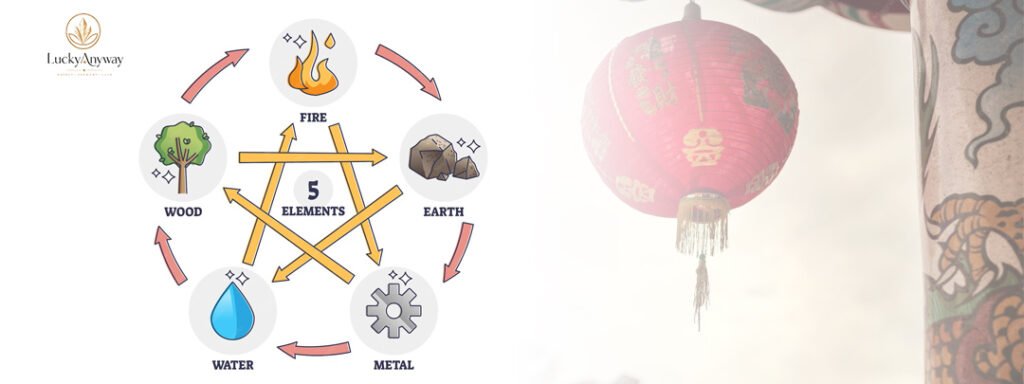
What Does Xi Yong Shen Mean in BaZi?
In traditional BaZi analysis, Xi Yong Shen (喜用神) refers to the elements that help a chart resolve its particular imbalance and function more effectively. It does not simply mean the element you are missing, your Day Master element, or a permanently “lucky element.”
The important distinction is this: BaZi does not begin by asking what element you want. It begins by asking what the chart actually needs.
A practitioner first examines the Month Branch, Day Master strength, seasonal conditions, the distribution and movement of the Five Elements, and the relationships among the Stems and Branches. From there, the central imbalance—the “illness” (病)—can be identified. The element capable of addressing that condition becomes the “medicine” (药), forming the basis for determining Yong Shen.
This is why two people with the same Day Master may require completely different Five Element recommendations.
Why Isn’t Your Favorable Element Simply Your Missing Element?
One of the most common mistakes in modern Five Element content is to look at a BaZi chart, count the elements, and assume that the missing element must be the favorable one.
Traditional BaZi does not work that way.
A chart may contain very little Fire and still not need Fire. Another chart may contain a great deal of Water and still benefit from additional Water under certain circumstances. The question is not whether an element exists. The question is what role that element plays within the entire structure.
Imagine a person whose chart contains very little Fire. A beginner might conclude:
“Fire is missing, so Fire should be added.”
But suppose the chart is already excessively hot because strong Wood is generating Fire through the seasonal structure, or because Fire is already functioning strongly through the hidden stems of several Branches. The visible count would not accurately describe the actual condition of the chart.
The reverse can happen as well. An element may appear several times but remain ineffective because it is out of season, lacks roots, is heavily controlled, or cannot perform the role required by the chart.
Presence is not the same as usefulness. Quantity is not the same as strength. Absence is not the same as deficiency.
That distinction is essential when evaluating Five Element accessories or other personalized recommendations.
How Are Favorable Elements Determined in Traditional BaZi?
A proper determination develops through several connected layers rather than one calculation.
1. Start With the Month Branch
The Month Branch establishes the seasonal environment in which the Day Master exists.
This is why the same Heavenly Stem can behave very differently in different months. A Wood Day Master born in spring is not interpreted in the same way as one born in autumn. The surrounding temperature, moisture, seasonal strength, roots, and interactions all change the practical meaning of the Five Elements.
The Month Branch therefore provides the first major reference point, but it is not the final answer.
2. Examine Day Master Strength
The next question is whether the Day Master has sufficient support.
Traditional analysis considers factors such as:
- De Ling (得令) — receiving seasonal support
- De Di (得地) — having roots in the Earthly Branches
- De Shi (得势) — receiving support from related Stems and surrounding structure
These are not simply points to be added together.
A single rooted element can sometimes carry more practical weight than several weak or inactive appearances elsewhere in the chart.
This is why a serious BaZi reading cannot be reduced to counting how many times Wood, Fire, Earth, Metal, or Water appears.
3. Examine Tiao Hou (调候)
Strength alone still does not tell the whole story.
A chart can be strong but excessively cold, or weak but excessively hot. It can be too dry, too damp, or lack the seasonal conditions necessary for the Five Elements to function properly.
This is where Tiao Hou becomes important.
For example, a winter-born Wood Day Master may have substantial Water support, but excessive Water can create cold and damp conditions. In such a case, simply saying “Water supports Wood, therefore more Water is favorable” completely misses the seasonal problem.
The chart must be evaluated as an environment, not merely as a collection of elemental labels.
What Does “Disease and Medicine” Mean in BaZi?
One of the most useful traditional ideas for understanding Xi Yong Shen is the relationship between Bing (病) and Yao (药)—the disease and its medicine.
The “disease” does not mean a medical diagnosis. It refers to the central structural problem or imbalance within the BaZi chart.
The practitioner asks:
What is preventing this chart from functioning properly?
It might involve excessive cold, excessive heat, dryness, dampness, excessive concentration of one element, an obstructed flow, an overly strong Day Master, insufficient support, or another structural problem.
Only after identifying that condition can the practitioner ask:
What can actually resolve it?
The second answer is the “medicine.”
This is a much more useful way to understand Yong Shen than thinking of it as a lucky color or lucky element.
A favorable element is valuable because of what it does, not simply because of what it represents.
Why Day Master Strength Alone Cannot Determine Xi Yong Shen
This distinction deserves particular attention.
A common formula found in simplified BaZi content is:
Strong Day Master → use elements that weaken it.
Weak Day Master → use elements that strengthen it.
There is some logic behind this as a broad starting principle, but treating it as a complete rule produces serious mistakes.
Strength answers one question:
How much support does the Day Master have?
Xi Yong Shen answers another:
What does this particular chart require?
Those questions overlap, but they are not identical.
| Judgment | What It Answers |
|---|---|
| Day Master Strength | How strong or weak is the Day Master within the chart? |
| Tiao Hou | What seasonal condition needs adjustment? |
| Structural Analysis | How are the Five Elements interacting? |
| Yong Shen | What element can address the principal need? |
| Xi Shen | What element can support or assist the useful function? |
A strong Day Master does not automatically mean Metal is favorable.
A weak Day Master does not automatically mean Water or Wood is favorable.
And an element that appears to “reduce” the Day Master’s strength may still be inappropriate if it aggravates another, more important problem in the chart.
Strength is an important diagnostic dimension. It is not the prescription itself.
A Practical Example: Why “Strong Means Use Metal” Can Fail
Consider a hypothetical Wood Day Master with extremely concentrated Wood energy.
At first glance, someone using a simple strong/weak formula might say:
“Wood is too strong, so Metal must be favorable because Metal controls Wood.”
But that conclusion is premature.
The practitioner must first examine:
- whether the Metal has sufficient root and support;
- whether the seasonal environment allows Metal to function;
- whether excessive Fire is already weakening Metal;
- whether Earth is available to support Metal;
- whether introducing Metal creates another destructive interaction;
- whether the chart has already reached an unusually concentrated state where ordinary strong-versus-weak rules are insufficient.
In an extremely one-sided chart, “strong” does not necessarily mean “attack the strongest element.”
This is one reason traditional BaZi requires judgment rather than a fixed Five Element formula.
The correct question is not:
“Which element controls Wood?”
It is:
“What does this particular Wood-dominant chart need in order to function?”
That difference is the foundation of professional analysis.
Why the Same Day Master Can Have Different Favorable Elements
Two people can both have Jia Wood (甲木) as their Day Master and still require very different Five Element considerations.
One may be born in spring, with abundant Wood and supportive Water. Another may be born in autumn, where Metal is prominent and the seasonal environment is completely different.
The Day Master is the same.
The chart is not.
That is why a professional does not begin a recommendation with:
“You are Jia Wood, therefore you need Fire.”
Instead, the analysis begins with the complete Four Pillars.
The Heavenly Stems show what is visible in the structure. The Earthly Branches provide roots, seasonal information, hidden stems, and relationships that may substantially change how the chart functions.
This is also why the Five Element meaning of a personalized accessory cannot responsibly be determined from a zodiac sign or a single Day Master alone.
A Better Way to Understand “Favorable”
The word “favorable” can be misleading when translated into everyday English.
It does not necessarily mean:
- something that makes you lucky;
- something you should always increase;
- something you are personally “missing”;
- something that will guarantee wealth or success.
In BaZi, its meaning is more functional.
An element may be favorable because it helps the chart resolve its principal imbalance or allows an important structure to function more effectively.
That is a much more precise concept.
This distinction also explains why a person should not automatically surround themselves with one color, material, crystal, or symbolic element simply because an online calculator labels it as their “lucky element.”
The label is only meaningful if the underlying chart analysis supports it.
A favorable element should be judged by its function within the chart, not by how often it appears or how attractive its symbolism sounds. In practical consultation, the biggest errors usually occur when an elemental label is treated as a conclusion rather than a starting point.
Do not choose a Five Element accessory solely because your chart “lacks” an element. Before making a personalized recommendation, the complete BaZi structure should be examined—including season, roots, strength, interactions, and the chart’s principal imbalance.
How Are Favorable Elements Actually Determined in BaZi?
The most important point is that a favorable element is not chosen simply because it is missing, weak, or traditionally associated with a particular Day Master. In serious BaZi analysis, the practitioner first identifies the central problem within the chart and then determines which element can address that problem effectively.
This is why the same element can be favorable in one chart and unfavorable in another. Water, for example, may nourish Wood in one chart, but excessive Water may create coldness and instability in another. Fire may warm a cold chart, yet become harmful when the chart is already excessively hot and dry.
The question is therefore not simply, “Which element do I have too little of?” The more useful question is, “What does this particular chart need?”
This distinction is essential when applying Five Element theory to personal recommendations. A missing element is not automatically a deficiency, and an abundant element is not automatically harmful. Its actual role must be judged within the entire chart.
Why Does “Strong Means Use Metal” Oversimplify BaZi?
A common modern shortcut says that a strong Day Master should be weakened by the elements that control, drain, or consume it, while a weak Day Master should receive more support. This can be useful as a very general starting principle, but it cannot replace actual chart analysis.
Consider a Wood Day Master. If the Wood is genuinely excessive, Metal may appear useful because Metal controls Wood. But whether Metal can actually function as the solution depends on the season, the strength of Metal itself, the presence of Earth, the condition of Fire and Water, and the relationships among the branches.
A strong Wood chart in a cold winter environment is not the same as a strong Wood chart in a hot summer environment. The first may require warmth before anything else can function properly. The second may have an entirely different priority.
This is why experienced practitioners do not begin with a fixed sentence such as “You are strong, therefore you need Metal.” They first ask what is actually causing the imbalance.
If someone tells you what element you need immediately after seeing only your Day Master, without examining the month, roots, supporting elements, seasonal conditions, and overall structure, the conclusion is incomplete.
What Is the Difference Between Yong Shen and Xi Shen?
In traditional BaZi terminology, Yong Shen (用神) refers to the element or influence selected to address the principal need of the chart. Xi Shen (喜神) generally refers to an element that supports the useful function of the Yong Shen or otherwise contributes positively to the chart.
These terms are related, but they should not be treated as interchangeable labels.
| Concept | Primary Question | Practical Function | Why It Matters | Common Mistake |
|---|---|---|---|---|
| Day Master Strength | How much support does the Day Master have? | Establishes the strength framework | Shows whether the Day Master is relatively strong or weak | Treating strength as the final answer |
| Yong Shen | What is the principal problem to address? | Provides the principal corrective function | Connects diagnosis with practical judgment | Choosing it from a fixed Day Master formula |
| Xi Shen | What can support the useful function? | Assists the favorable direction | Helps strengthen the intended correction | Assuming it is always identical to Yong Shen |
Why Can the Same Element Be Favorable in One Chart but Unfavorable in Another?
Five Element relationships are functional rather than absolute. An element does not carry a permanent label of “good” or “bad.” Its effect changes according to the environment in which it appears.
Take Water as an example. Water can nourish Wood, but too much Water may make a chart excessively cold or cause Wood to become unstable. Fire can provide warmth and activate a cold chart, but excessive Fire can create dryness and consume Water.
Earth can stabilize Water and provide a foundation for Metal, but excessive Earth may obstruct Water or burden a chart that already has too much Earth. Metal can structure Wood, yet excessive Metal may become an aggressive controlling force when Wood lacks sufficient support.
This is the reason a professional reading does not stop at identifying the element itself. The practitioner must examine what the element does inside the particular chart.
“Wood,” “Fire,” “Earth,” “Metal,” and “Water” are not five universal products that can simply be added or removed. Their meaning changes according to season, strength, structure, and interaction.
What Should You Look at Before Choosing a Favorable Element?
A sound judgment normally begins with the complete BaZi chart rather than a single label. The Day Master provides the reference point, but the month branch establishes the seasonal environment, while the remaining heavenly stems and earthly branches reveal support, control, drainage, combination, clash, and other interactions.
The practical sequence is therefore closer to diagnosis than selection. First establish the Day Master. Then examine its strength and seasonal condition. Next identify the central imbalance or “病” within the chart. Only after that can the practitioner consider which element functions as the appropriate “药”.
This approach also explains why two people with the same Day Master may receive completely different Five Element recommendations. Their charts may share one reference point while having very different environments and problems.
If you are trying to understand your own Five Element direction, a complete BaZi Analysis is more meaningful than choosing an element from your zodiac sign, birth year, or Day Master alone.
Common Mistakes About Favorable Elements
“My chart is missing Fire, so I need Fire.”
Not necessarily. If Fire is actually the source of excessive heat or dryness, its absence may be protective rather than problematic.
“I am a strong Wood Day Master, so Metal must be my favorable element.”
Not automatically. Metal may control Wood, but its usefulness depends on whether the chart can receive that influence appropriately and whether another issue—such as coldness, dryness, or structural conflict—takes priority.
“My favorable element should be the element that makes me stronger.”
This confuses Day Master strength with the chart’s overall need. Sometimes the useful element supports the Day Master; sometimes it controls, drains, or transforms excessive energy. The correct direction depends on the diagnosis.
A recommendation based only on birth year, zodiac animal, or a simple Five Element calculator may provide a convenient label, but it does not establish whether that element actually solves the central problem of the BaZi chart.
Why a Complete BaZi Chart Matters
The deeper value of Xi Yong Shen is that it moves Five Element interpretation away from generic symbolism and toward individualized judgment. A person is not simply “a Wood person,” “a Fire person,” or someone who is “missing Water.”
The chart is a complete system. The Day Master, month branch, roots, supporting stems, elemental interactions, seasonal climate, and overall structure must be considered together. In more advanced cases, ordinary strong-versus-weak formulas may also become insufficient, particularly when the chart approaches highly concentrated or special structures.
This is also why responsible Five Element recommendations should not be presented as universal rules. If the recommendation concerns a personal choice such as color, material, or an accessory, the underlying judgment should come first and the physical choice should come afterward.
At LuckyAnyway, the principle is straightforward: understand the chart before deciding what elemental direction is appropriate. If you want to understand how this approach connects with the broader philosophy behind our work, you can also explore our About Us page.
FAQ
Is my favorable element the same as my Day Master element?
Not necessarily. The Day Master is the reference point of the chart, while the favorable element is determined from the chart’s overall needs. They can be the same, but they do not have to be.
Does a missing Five Element mean I need to add it?
No. Absence does not automatically mean deficiency. An element may be missing because the chart does not require it. Its usefulness must be determined from the complete structure.
Can a weak Day Master still have a favorable outcome?
Yes. Weakness is not a judgment of good or bad destiny. It is one analytical dimension. The more important question is whether the overall chart has an appropriate structure and whether the useful elements can function effectively.
Can I determine my Xi Yong Shen from my zodiac sign?
No. A zodiac sign represents only one part of the traditional system and cannot replace a complete BaZi analysis. Determining favorable elements requires examining the full Four Pillars.
A final professional judgment: Xi Yong Shen should not be reduced to “the element you need more of.” It is the result of understanding what the chart is actually asking for. Once that distinction is understood, Five Element recommendations become far more precise—and far less dependent on generic formulas.