
What Are the Traditional Methods of Life Adjustment in BaZi?
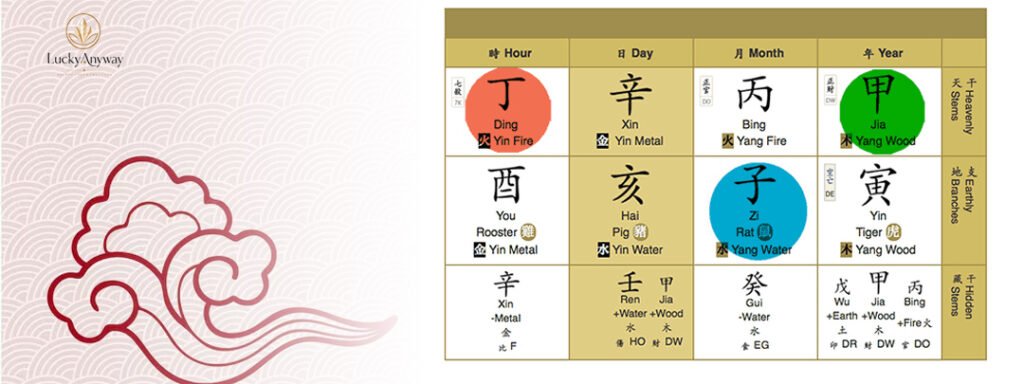
Traditional Ways to Understand and Adjust Life Through BaZi
Can BaZi really change a person’s destiny? Traditional Chinese metaphysics does not view destiny as something that can simply be replaced or rewritten. Instead, BaZi provides a framework to understand a person’s original structure, timing, and relationship with the surrounding environment. Through methods such as understanding one’s chart, adjusting lifestyle choices, applying Feng Shui principles, and using personalized Five Element support, people seek a more harmonious relationship with their own conditions.
The traditional saying “One Destiny, Two Luck, Three Feng Shui” reflects a layered understanding of life. It does not mean destiny alone controls everything, nor does it suggest that external methods can instantly change one’s path. Rather, it describes how innate structure, changing cycles, and environmental influences interact throughout life.
What Does “One Destiny, Two Luck, Three Feng Shui” Mean in BaZi?
In traditional BaZi theory, a person’s life experience is understood through the interaction between Heaven, Earth, and Human factors. The phrase “One Destiny, Two Luck, Three Feng Shui” summarizes three major influences that practitioners consider when analyzing a person’s development.
Destiny (命): The Original Structure Recorded in BaZi
“Destiny” refers to the information contained within a person’s birth chart. In BaZi, this structure is represented by the Four Pillars: Year, Month, Day, and Hour. These pillars reveal the relationship between the Heavenly Stems and Earthly Branches, including the strength, balance, and movement of the Five Elements.
The purpose of studying destiny is not to label someone as lucky or unlucky. A professional BaZi analysis examines questions such as:
- How strong or weak is the Day Master?
- What seasonal influence does the chart receive?
- Where is the imbalance or “problem” within the structure?
- Which elements can act as support or adjustment?
This is why traditional practitioners do not judge a person only by their zodiac sign or a single element. The complete structure must be considered. At LuckyAnyway, this principle is also the foundation behind our approach to BaZi Analysis, where the focus is on understanding the whole chart rather than isolated symbols.
Luck (運): The Changing Cycles of Time
If destiny represents the original structure, luck represents movement and timing. In BaZi, this is mainly studied through the Ten-Year Luck Cycles (大运) and yearly influences.
A person may have a certain natural ability within their chart, but whether that ability can be expressed often depends on timing. The same element can create different effects depending on whether it supports or challenges the existing structure.
For example, a strong Fire influence may be beneficial in a cold chart because it provides warmth and movement. However, excessive Fire in an already hot and dry chart may create another imbalance. This is why BaZi evaluation is not based on simple rules such as “more of an element is always better.”
Feng Shui (風水): The Relationship Between People and Environment
Feng Shui is often misunderstood as simply arranging objects for wealth or luck. Traditional Feng Shui is actually concerned with how people interact with their surroundings, including direction, space, environment, and energy movement.
A suitable environment can support a person’s development, while an unsuitable environment may create unnecessary pressure. However, traditional Feng Shui does not replace the individual’s own chart. It works together with personal conditions.
This principle follows the traditional idea that humans are connected with Heaven and Earth. A person’s internal structure and external environment should not be viewed separately.
Can BaZi Change Your Destiny or Only Help You Understand It?
The traditional view is more subtle than simply saying “BaZi can change destiny.” A birth chart cannot be changed because it represents the original conditions a person receives at birth. However, understanding the chart allows a person to make more suitable decisions.
A professional practitioner does not use BaZi to create unrealistic promises. Instead, the purpose is to identify patterns, understand strengths and limitations, and find methods that support better choices.
The Principle of “Knowing the Structure Before Making Adjustments”
One of the most important ideas in traditional BaZi is that adjustment must come after understanding. Without knowing the structure, adding an element blindly may produce the opposite result.
For example, many beginners believe:
- If Fire is missing, add Fire.
- If the Day Master is weak, add the same element.
- If a zodiac sign belongs to an element, that element must be suitable.
These approaches appear simple but do not represent traditional BaZi analysis.
Classical BaZi theory emphasizes identifying the “illness” (病) before finding the “medicine” (药). The useful element is determined by what the chart requires, not by what appears absent.
A missing element is not automatically a problem. Sometimes an absent element is actually avoiding an imbalance. Traditional analysis focuses on the role of each element within the whole structure.
What Are the Traditional Methods Used for Life Adjustment?
Traditional Chinese metaphysics developed several approaches for improving the relationship between a person and their circumstances. These methods are not replacements for destiny, but ways of creating better alignment.
1. Understanding the Chart (命理分析)
The first method is always analysis. Before any adjustment, practitioners study the Four Pillars, Day Master strength, seasonal influence, Five Element relationships, and the interaction between Heavenly Stems and Earthly Branches.
Without this foundation, any recommendation becomes a general suggestion rather than a personalized approach.
2. Wearing Method (佩戴法): Using Five Element Symbols as Support
Among modern applications of traditional theory, personalized Five Element accessories are one way people connect with these concepts in daily life.
However, traditional practice does not recommend accessories simply according to birth year, zodiac sign, or a missing element. A meaningful approach considers:
- Day Master characteristics
- Seasonal balance
- Strength and weakness of the chart
- The relationship between useful and unfavorable elements
This is why a personalized Five Element bracelet should be viewed as a symbolic support method based on chart analysis, rather than a universal object suitable for everyone.
At LuckyAnyway, our Five Element collection follows this principle by focusing on personalized matching rather than general zodiac-based selection: Five Element Collection.
3. He Ji and Rescue Methods (合救法): Adjusting Through Element Relationships
Another traditional adjustment approach is often described through the concept of “He Ji” (合救). This does not mean randomly adding elements or trying to force a specific outcome. Instead, it refers to using the relationships between the Five Elements to improve an existing imbalance within a chart.
In classical BaZi thinking, every chart contains interactions between elements. Some relationships create support, some create pressure, and some require mediation. The key question is not “Which element is powerful?” but rather:
- Where is the imbalance located?
- What element creates the difficulty?
- What element can transform or resolve the conflict?
This is the foundation of the traditional “disease and medicine” (病药) approach. A practitioner first identifies the problem within the structure, then determines the element or method that can provide adjustment.
Understanding Five Element Adjustment Through Balance
| Adjustment Principle | Traditional Meaning | Example Application | Purpose | Important Note |
|---|---|---|---|---|
| Five Element Introduction | Using suitable elemental qualities to support balance | Personalized materials, colors, symbols | Create supportive conditions | Not based on missing elements alone |
| Tong Guan (通关) | Using an intermediate element to connect conflicting forces | Water between Metal and Wood interaction | Reduce direct conflict | Requires full chart evaluation |
| He (合) | Relationship and transformation between elements | Heavenly Stem combinations or Branch combinations | Create a different interaction pattern | Not every combination is automatically beneficial |
| Zhi Hua (制化) | Control and transformation between elements | Using one element to regulate excessive energy | Restore structural harmony | Strength alone does not determine usage |
A professional adjustment method does not ask “What element do I lack?” It asks “What role does each element play in my current structure?” The same element can support one person and create imbalance for another.
Can Changing Your Name Influence Your Life Path?
Name adjustment (改名法) is another traditional method discussed within Chinese cultural practices. Historically, names were considered more than simple labels—they carried symbolic meaning, social identity, and connections with language and culture.
In some traditional approaches, name selection may consider factors related to birth information, including Five Element relationships and symbolic balance. However, changing a name does not rewrite the original BaZi structure.
The original Four Pillars remain unchanged because they represent the conditions received at birth. A name adjustment is considered a form of external support, similar to improving one’s environment or making more suitable choices.
Why Traditional Methods Require Professional Evaluation
One of the biggest misunderstandings in modern online content is treating BaZi adjustment like a simple formula:
- Strong Wood means add Metal.
- Weak Water means add Water.
- Born in a certain zodiac year means use a certain element.
These approaches are easy to understand but do not represent traditional BaZi reasoning.
Classical practitioners examine the entire structure, including:
- Seasonal influence (调候)
- Day Master strength (旺衰)
- Useful and unfavorable elements (喜忌)
- Interactions between Heavenly Stems and Earthly Branches
Only after understanding these factors can an adjustment method be considered appropriate.
Avoid choosing an accessory only because your zodiac sign belongs to a certain element. A personalized approach begins with understanding your BaZi structure and identifying what kind of support is actually suitable.
How Are Traditional Adjustment Methods Applied in Modern Life?
Today, many people are interested in BaZi because they want a deeper understanding of their choices, timing, and personal direction. Traditional adjustment methods can be viewed as practical ways of creating alignment between personal conditions and daily life.
For example:
- A person may adjust their environment through Feng Shui principles.
- A person may use symbolic Five Element objects as a reminder of balance.
- A person may make decisions according to favorable timing.
The important point is that these methods are based on understanding first, adjustment second.
After years of studying BaZi structures, one principle remains consistent: the most useful adjustment is not the strongest element, but the element that solves the actual imbalance within the chart.
Why Personalized BaZi-Based Methods Are Different From General Recommendations
Many modern Five Element products are selected according to simple categories such as zodiac signs, birth years, or popular element associations. While these ideas may introduce people to Chinese culture, they do not represent the complete logic of BaZi.
A personalized approach considers the individual structure behind the symbols.
This is why LuckyAnyway focuses on combining traditional BaZi principles with modern daily applications. Understanding the chart comes before selecting a symbolic support method.
If you would like to understand how your personal structure is evaluated, you can learn more through our BaZi Analysis service. For questions about our approach or personalized guidance, you may also contact us through our Contact page.
Our Five Element Collection follows the same principle: products are not designed around general zodiac categories, but around personalized Five Element concepts:
Explore the Five Element Collection
Frequently Asked Questions
1. Can BaZi really change my destiny?
Traditional BaZi does not suggest that a birth chart can be rewritten. Instead, it provides a way to understand personal conditions and make adjustments that create better alignment.
2. Is choosing a Five Element bracelet based on my zodiac sign accurate?
A zodiac sign represents only one part of the traditional system. A complete BaZi evaluation considers the entire chart, including season, strength, and element relationships.
3. Does missing an element mean I need to add that element?
No. A missing element is not automatically a weakness. The important question is whether that element supports or disturbs the overall balance.
4. What is the difference between general and personalized Five Element methods?
General methods use broad categories, while personalized methods consider the individual’s BaZi structure and determine which approach is more suitable.
Traditional Chinese wisdom does not focus on controlling destiny, but on understanding the relationship between people, time, and environment. Through BaZi analysis and appropriate adjustment methods, individuals can better understand their own path and make choices that are more aligned with their personal structure.