
What Is a Day Master in BaZi? Understanding the Five Elements
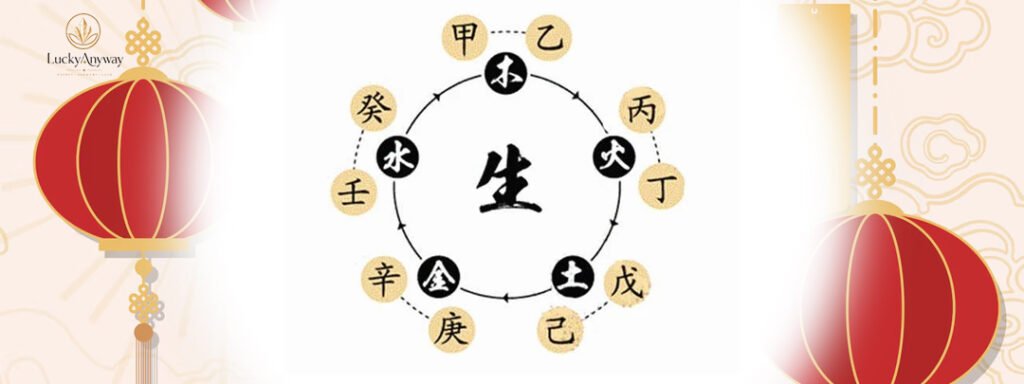
A Practical Understanding of the Day Master Beyond Simple Five Element Labels
A Day Master in BaZi is the Heavenly Stem of the Day Pillar in a Four Pillars chart. It is the central reference point practitioners use to understand how the Five Elements, Ten Gods, seasonal conditions, and other parts of the chart interact with the person represented in the chart. However, the Day Master is not a personality label and does not automatically tell someone which element they need. Traditional BaZi analysis requires examining the entire structure before making any judgment.
Many people first encounter BaZi through simple statements such as “I am a Fire person” or “My element is Wood.” These explanations may introduce beginners to the Five Elements, but they do not represent the complete approach of classical Chinese metaphysics. In professional BaZi analysis, the Day Master is a starting point, not the final answer.
Insight — The Day Master is a reference point, not a personality category. Experienced BaZi practitioners do not begin by asking “What type of person is this element?” They first examine how that element exists within the chart: whether it has support, whether it is affected by the season, and whether the overall structure allows it to function properly.
What Does the Day Master Represent in BaZi?
The Four Pillars system is built from four moments of birth: Year, Month, Day, and Hour. Each pillar contains a Heavenly Stem and an Earthly Branch, creating the eight characters known as BaZi (八字).
Among these four pillars, the Heavenly Stem of the Day Pillar is called the Day Master, or 日主. It becomes the reference point because the other elements in the chart are interpreted through their relationship with it.
For example, if a person’s Day Master is Jia Wood (甲木), then Water, Wood, Fire, Earth, and Metal are not simply viewed as separate elements. They are understood according to their relationship with Jia Wood:
- Water represents Resource influence because Water generates Wood.
- Wood represents Companion influence because Wood shares the same element.
- Fire represents Output influence because Wood generates Fire.
- Earth represents Wealth influence because Wood controls Earth.
- Metal represents Officer influence because Metal controls Wood.
This relationship system is one of the foundations of the Ten Gods (十神) framework. However, identifying these relationships is only the beginning. A professional interpretation must still consider whether these influences are strong or weak, supportive or excessive, and suitable for the specific structure of the chart.
Traditional Principle — A Day Master cannot be judged alone. Classical BaZi does not evaluate a person by one symbol. The Day Master must be viewed together with the Month Branch, the seasonal environment, the strength of the Five Elements, and the relationships between the Four Pillars.
Why Is the Day Master Not Simply Your Personality?
One of the most common misunderstandings today is treating the Day Master as a personality category. A person may search online and find descriptions such as “Fire Day Masters are passionate” or “Water Day Masters are intelligent.” While traditional texts do discuss the characteristics of the Ten Heavenly Stems, these descriptions are not intended to function like modern personality tests.
In BaZi theory, the same Day Master can appear very differently depending on the conditions surrounding it.
A Jia Wood Day Master, for example, is often compared to a large tree. This image suggests growth, structure, and upward development. However, a tree growing in fertile soil with suitable water and sunlight is not the same as a tree facing harsh conditions without support.
Therefore, traditional analysis does not ask only:
“What kind of person is this Day Master?”
Instead, it asks:
“How does this Day Master function within this specific chart?”
This difference is essential. The purpose of BaZi is not to place people into fixed categories. It is to understand the relationship between the individual represented by the Day Master and the conditions shown in the complete Four Pillars.
How Do the Five Elements Relate to the Day Master?
The Five Elements — Wood, Fire, Earth, Metal, and Water — provide the basic framework for understanding relationships inside a BaZi chart. However, these elements are not fixed labels. Their meaning changes according to their position, strength, season, and interaction with other elements.
For example, Water generally generates Wood. But in traditional analysis, more Water is not always better for a Wood Day Master. If Water becomes excessive and the chart becomes too cold or unstable, the result may be different from simple “support.”
This is why classical BaZi emphasizes balance, timing, and structure. The same element can have different effects depending on the condition of the chart.
| Five Element | Relationship to Day Master | Traditional Symbolism | Common Beginner Interpretation | Professional Consideration |
|---|---|---|---|---|
| Wood | Companion element | Growth, development, expansion | Often described as creativity or kindness | Must be judged through season, roots, and balance |
| Fire | Output element | Expression, transformation, visibility | Often described as passion | Needs evaluation of whether it warms or overheats the chart |
| Earth | Wealth element | Support, stability, resources | Often described as reliability | Depends on whether Earth helps or blocks the structure |
| Metal | Officer element | Structure, discipline, regulation | Often described as determination | Depends on strength, timing, and relationship with the Day Master |
| Water | Resource element | Knowledge, nourishment, movement | Often described as intelligence | Must consider whether it supports or creates imbalance |
The table above provides a general framework, but traditional BaZi does not stop at these descriptions. The Five Elements become meaningful only when placed inside the complete chart.
What Is the Difference Between Jia Wood and Yi Wood?
Within the Five Elements system, Wood is not represented by only one type of energy. Classical BaZi divides Wood into two Heavenly Stems: Jia Wood (甲木) and Yi Wood (乙木). Although both belong to Wood, their qualities and ways of expressing themselves are different.
This distinction is one reason professional BaZi analysis does not simply say “a Wood person has certain characteristics.” The same element can have different expressions depending on its Yin and Yang nature.
Jia Wood (甲木): The Strength of Growth and Structure
Jia Wood is Yang Wood. Traditional texts often compare it to a tall tree or a strong piece of timber. It represents upward growth, structure, direction, and the ability to stand firmly.
However, a tree does not become strong simply because it is a tree. It requires suitable soil, water, sunlight, and seasonal conditions. In the same way, a Jia Wood Day Master must be evaluated according to whether it has roots, whether it receives support, and whether the surrounding elements allow it to develop.
Yi Wood (乙木): The Strength of Adaptation and Connection
Yi Wood is Yin Wood. It is often compared to vines, flowers, or flexible plants. Unlike Jia Wood, which emphasizes upright structure, Yi Wood reflects adaptability, sensitivity, connection, and the ability to respond to changing environments.
Neither Jia Wood nor Yi Wood is automatically stronger or better. Their value depends on the complete chart. A strong tree and a flexible vine both have their own functions when placed in the right conditions.
Insight — Traditional BaZi evaluates quality, not just quantity. A chart with more of one element is not automatically better. Classical practitioners examine whether the element appears at the right time, has proper support, and contributes to the overall structure. The question is never only “how much element exists,” but “how does that element function?”
Can Your Day Master Tell You Which Element You Need?
This is one of the most important questions for anyone interested in BaZi and Five Element products. The short answer is: No, the Day Master alone cannot determine what element you need.
A common misunderstanding is:
“My Day Master is Fire, so I should add more Fire.”
This conclusion is incomplete. A Fire Day Master may require different support depending on the month of birth, the strength of the chart, the presence of other elements, and whether Fire is helping or creating imbalance.
In traditional BaZi, the process usually follows a deeper order:
- First: Examine the seasonal influence through the Month Branch (月令).
- Second: Evaluate whether the Day Master is strong or weak through support, roots, and overall structure.
- Third: Consider temperature and moisture through the principle of adjustment (调候).
- Finally: Determine favorable and unfavorable elements according to the specific chart.
This is why responsible Five Element recommendations should not be based only on zodiac signs, birth years, or a single element. A complete BaZi chart provides the necessary context.
What Are the Common Misunderstandings About the Day Master?
As interest in BaZi grows worldwide, many simplified explanations have appeared online. Some are useful introductions, but they can create confusion when people begin making personal decisions based on them.
Misunderstanding 1: “My Day Master Is Fire, So I Need More Fire”
A Day Master represents the reference point of the chart, not the final recommendation. More of the same element may strengthen the Day Master, but strengthening is not always the goal.
Sometimes a strong Day Master requires control, release, or balance rather than additional support.
Misunderstanding 2: “A Weak Day Master Means a Bad Destiny”
Strength and weakness in BaZi are technical descriptions, not judgments of success or failure.
A weaker Day Master can function very well when the chart provides appropriate support and structure. Likewise, a strong Day Master is not automatically fortunate if the energy becomes excessive or lacks balance.
Misunderstanding 3: “The Missing Element Is Always What I Need”
This is one of the most common mistakes in modern Five Element discussions.
A missing element does not automatically represent a problem. Some charts benefit from the absence of certain elements because those elements may create imbalance if introduced.
Traditional BaZi focuses on finding what supports the structure, not simply filling what appears missing.
Advice — Choose Five Element products through understanding, not assumption. If someone recommends a specific element only because of your birth year, zodiac sign, or Day Master alone, the analysis is incomplete. A more responsible approach is to understand the full BaZi structure first.
How Do Traditional Practitioners Evaluate a Day Master?
Classical BaZi analysis is a structured process. The Day Master is the starting point, but practitioners continue by examining how the entire chart supports or challenges it.
- Month Branch (月令): The seasonal environment and the strongest influence on the chart.
- Root and Support: Whether the Day Master has foundation through the Earthly Branches.
- Overall Balance: Whether the Five Elements interact smoothly or create excess and deficiency.
- Seasonal Adjustment: Whether the chart requires warming, cooling, drying, or moistening.
This approach follows the traditional principle found throughout classical BaZi texts such as Di Tian Sui (滴天髓), where the quality of a chart is understood through balance, structure, and proper use of its elements rather than through simple labels.
Understanding your Day Master is the first step in learning BaZi. However, personal Five Element guidance requires examining the complete Four Pillars chart. This is why LuckyAnyway focuses on traditional BaZi analysis rather than recommending elements through general zodiac categories.
For those who want to understand their own chart structure, our BaZi Analysis provides a deeper look at personal Five Element relationships and traditional interpretation methods.
Our approach is based on respect for traditional knowledge and careful interpretation rather than quick conclusions. You can learn more about our philosophy and how we approach Chinese metaphysical traditions through our About Us page.
Frequently Asked Questions About Day Master in BaZi
Is my Day Master the same as my Chinese zodiac sign?
No. The Chinese zodiac is based on the Year Pillar, while the Day Master comes from the Heavenly Stem of the Day Pillar. They represent different parts of the Four Pillars system.
Does my Day Master determine my personality?
Not by itself. The Day Master is a reference point for analyzing the whole chart. Personality interpretation requires considering the interaction of all elements and structures.
If my Day Master is weak, does it mean my life will be difficult?
No. Weakness and strength are technical conditions in BaZi analysis. A chart is evaluated by whether the overall structure is balanced and whether favorable elements are available.
Should I choose Five Element accessories only based on my Day Master?
A Day Master can provide useful information, but it should not be the only factor. Traditional recommendations consider the complete BaZi chart before determining suitable Five Element approaches.
Learning BaZi begins with understanding the Day Master, but true interpretation begins when the entire chart is considered as one system. Through this traditional perspective, the Five Elements become more than symbols — they become a framework for understanding relationships, balance, and personal direction.