
Yin House vs. Yang House Feng Shui: What’s the Difference?
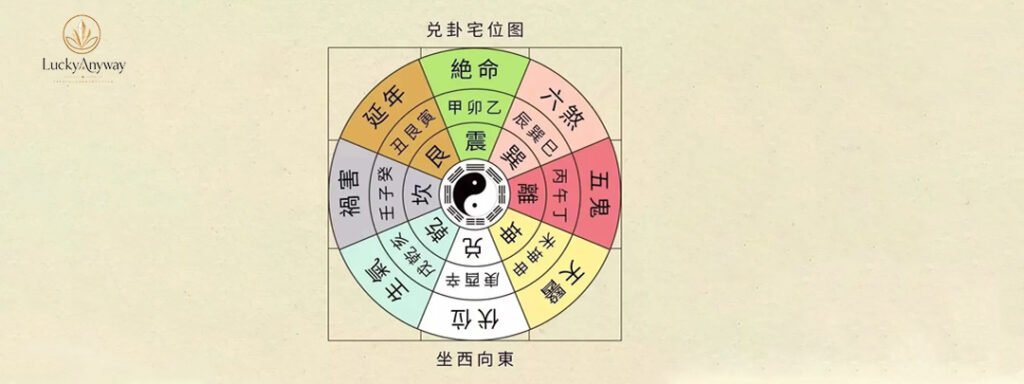
Two Different Sides of Traditional Chinese Feng Shui
Yin House Feng Shui and Yang House Feng Shui are two different applications of traditional Chinese Feng Shui. Yin House Feng Shui concerns burial grounds and ancestral resting places, while Yang House Feng Shui concerns homes, workplaces, and other spaces occupied by living people. Their purposes overlap through the traditional study of Qi and environmental form, but they are not interchangeable. For a homeowner, apartment resident, or business owner, Yang House Feng Shui is the relevant starting point. Understanding this distinction prevents one of the most common mistakes in modern Feng Shui discussions: taking a principle developed for one type of environment and applying it mechanically to another.
This sounds like a simple distinction, but it changes how you should approach almost every Feng Shui question that follows.
What Is Yin House Feng Shui?
Yin House Feng Shui traditionally concerns the resting place of ancestors, particularly burial grounds. In Chinese tradition, the location and form of an ancestral burial site were not viewed simply as matters of memorial preference. The surrounding landscape was considered in relation to Qi, with the belief that a well-sited resting place could provide protection and blessing to descendants.
This is where traditional landscape Feng Shui becomes especially important. Mountains, ridges, valleys, watercourses, surrounding landforms, and the relationship between them may all be examined. Classical discussions often place strong emphasis on the broader configuration of the landscape rather than treating the burial site as an isolated point.
The familiar terms Dragon, Cave, Sand, and Water belong to this wider language of traditional Feng Shui landscape assessment. They are not simply decorative expressions. They describe ways of reading terrain, support, gathering, movement, and environmental relationships.
For someone living in a modern city, however, this is not a reason to start applying burial-ground rules to a condominium bedroom. That is precisely where good judgment matters.
If your concern is your current home, your entrance, your office, or the environment around your family, you are dealing primarily with Yang House Feng Shui. Yin House theory is part of the history and depth of the tradition, but it is not the correct starting point for every Feng Shui question.
What Is Yang House Feng Shui?
Yang House Feng Shui concerns places used by living people. A private house, apartment, office, shop, studio, or other occupied building can fall into this category.
The practical questions are therefore different. Instead of asking only about a burial site and its surrounding landscape, Yang House Feng Shui considers the relationship between people and the environment in which they live and work.
- Where does the main entrance face?
- What is directly outside the entrance?
- What can be seen through important windows?
- Are there sharp, oppressive, or directly approaching forms nearby?
- How does the building relate to roads, neighboring structures, open space, and surrounding terrain?
- How are the internal rooms arranged in relation to the wider environment?
These questions may sound much more ordinary than the mystical image sometimes associated with Feng Shui. That is intentional. A serious home assessment begins with the actual property.
At LuckyAnyway, this is the part of Feng Shui most relevant to people who want to understand their own living environment. You can explore our broader approach through the LuckyAnyway home page, where Feng Shui is considered alongside other aspects of traditional Chinese culture.
Why Are Yin House and Yang House Feng Shui Not Interchangeable?
The easiest mistake is to assume that because both systems discuss Qi, mountains, water, form, and direction, the same rules can simply be transferred between them.
That is not a sound way to work.
A burial ground and a family home have completely different functions. One concerns an ancestral resting place and its relationship with descendants; the other is an active environment containing entrances, bedrooms, kitchens, workspaces, movement, daily routines, and living occupants.
The purpose of the site changes the meaning of the site.
This is an important professional distinction because online Feng Shui advice often removes the original context from a traditional rule. Once the context disappears, a statement can sound universal even though it was never intended to be universal.
| Aspect | Yin House Feng Shui | Yang House Feng Shui | Main Concern | Modern Relevance |
|---|---|---|---|---|
| Purpose | Ancestral resting place | Living environment | Relationship between site and its intended occupants | Yang House is usually more relevant to consumers |
| Environment | Landscape and burial setting | Building and surrounding environment | How form and Qi relate to the site | Both remain important within their own context |
| Primary Forms | Mountains, water, terrain, landscape structure | Buildings, roads, entrances, windows, rooms, surrounding forms | How the environment is shaped and approached | Yang House can be observed in daily life |
| Traditional Purpose | Ancestral protection and descendant blessing | Support for people living and working in the space | Different human relationships with the site | Do not mix the two casually |
| Practical Approach | Broader landscape assessment | External form plus internal arrangement | Read the whole environment before choosing adjustments | Start with Yang House for your home |
The table is not meant to reduce either tradition to five simple categories. It is simply a useful boundary: different places require different questions.
Why Does the Landscape Matter More in Yin House Feng Shui?
Traditional Yin House Feng Shui developed in close relationship with the Chinese landscape. In a classical setting, the burial site could not be separated from the mountains, ridges, watercourses, valleys, and surrounding terrain.
This is one reason the language of Dragon, Cave, Sand, and Water is so important in traditional landscape Feng Shui. The practitioner is not merely judging whether a grave is “pretty” or “peaceful.” The concern is the larger environmental configuration: where the terrain comes from, how it gathers, where it opens, what supports it, and how water and other forms relate to the site.
There is a useful lesson here for modern home Feng Shui as well: the property should never be judged as though it were floating in empty space.
Even in a city apartment, the surroundings matter. A building may face a road, another tower, an open plaza, a narrow gap, a wall, or a body of water. The vocabulary changes with the environment, but the habit of looking beyond the four interior walls remains valuable.
This is where Form Feng Shui becomes particularly practical. Before asking which object should be placed inside a room, look at what is already shaping the environment from outside.
Does Yang House Feng Shui Only Concern the Interior of a Home?
No. This is another common misunderstanding.
People often hear “home Feng Shui” and immediately think about furniture placement, bed direction, colors, mirrors, plants, or decorative objects. These can be considered, but they are only part of the picture.
In practical Yang House Feng Shui, the exterior can have a very strong role. The approach to the property, the main entrance, nearby structures, roads, corners, open spaces, and the view from important rooms can all deserve attention.
Imagine two apartments with exactly the same floor plan. One faces an open, balanced space with comfortable distance from neighboring structures. The other faces a large building at very close range, with a sharp architectural corner dominating the main window. The floor plans may be identical, yet the environmental conditions are not.
This is why copying a “perfect Feng Shui bedroom layout” from the internet is rarely enough. The same interior arrangement can sit inside two very different external environments.
For homeowners, this is one of the most useful practical lessons from traditional Form Feng Shui: look outside before you start moving furniture.
How Do Form and Direction Enter Yang House Feng Shui?
Once the basic environment has been observed, another layer can be considered: direction and spatial relationships.
This is where the Eight Trigrams and Bagua become relevant. Traditional Chinese Feng Shui associates the eight trigrams with particular directions, natural qualities, family relationships, and Five Element correspondences. The center and eight directions provide a framework for examining the property rather than viewing the house as one undivided space.
But there is an order worth remembering: direction does not erase form.
If a house has an unfavorable physical feature outside its main entrance, knowing the direction of the entrance is useful, but it does not mean the external feature can simply be ignored. Conversely, an apparently difficult direction should not automatically lead someone to panic if the overall environment is otherwise well supported.
This is why experienced judgment matters. Feng Shui is not a collection of independent switches where one rule turns a house “good” and another turns it “bad.” The relationships between features matter more than isolated labels.
Should You Use Yin House Feng Shui Rules for Your Home?
For most homeowners, the answer is no. You should study Yin House Feng Shui as part of the broader Chinese tradition if you want a deeper understanding of Feng Shui, but you should not casually transfer burial-ground principles to a living residence.
The better approach is to work within Yang House Feng Shui first.
Start with the external environment. Examine the entrance, roads, neighboring buildings, windows, visible forms, open and enclosed areas, and the basic arrangement of the home. Then consider direction and the Bagua. After that, more specific questions can be addressed.
If your interest becomes personal rather than purely environmental, it can also make sense to study how traditional Chinese systems consider an individual’s birth information and Five Elements. That is a separate subject, which is why LuckyAnyway keeps BaZi analysis as its own area rather than presenting every personal question as a simple home Feng Shui rule.
What Should You Look at First in a Yang House?
If you want to examine your own home, do not begin by buying a Feng Shui cure. Begin by standing at the front entrance and looking outward.
Ask what approaches the property. Notice the road, pathway, neighboring buildings, walls, poles, trees, open spaces, slopes, and anything unusually close to the entrance. Then look at the main windows and consider what dominates the view.
After that, walk through the home and observe how people actually use the space. Which rooms are active? Which areas are private? Where does movement naturally concentrate? Are there places that feel cramped, exposed, dark, blocked, or unusually uncomfortable?
This first inspection often tells you more than an online checklist.
Only then should you start asking more specialized questions about Bagua directions, Five Elements, personal Feng Shui, or traditional objects. If the physical problem can be changed physically, that option deserves serious consideration before reaching for a symbolic remedy.
A practical rule worth remembering: change the environment when you can; use symbolic support when physical change is limited or when it has a meaningful place within your traditional practice.
Can Feng Shui Objects Replace a Good Environment?
No traditional object should be treated as a universal substitute for sound environmental judgment.
Feng Shui objects can have cultural, symbolic, and traditional significance. Talismans, protective objects, crystals, coins, mirrors, and other items may be used according to different traditions and personal beliefs. But placing an object in a room does not automatically remove every unfavorable form outside the property.
This is particularly important when dealing with obvious external conditions. If a window is dominated by an unpleasant structure, a physical screen or change in the visual relationship may be worth considering. If an entrance is exposed to a direct and forceful approach, changing the approach or adding an appropriate physical barrier may be more meaningful than simply hanging an object indoors.
In other words, do not let the object become more important than the situation it is supposed to address.
For people who value traditional Chinese practices as a source of faith, symbolism, or personal intention, an object can still have a meaningful role. The point is not to dismiss that role, but to place it in the correct context.
Why Does This Distinction Matter for Modern Feng Shui?
Modern consumers have access to more Feng Shui information than ever before, but more information does not always mean better understanding. A short video can take a traditional rule out of its original context and turn it into a universal formula in less than a minute.
That is where beginners need to be careful.
If someone tells you that one direction is always lucky, one object always cures a problem, or one room automatically determines your fortune, ask a simple question: Which Feng Shui method is this based on, and what conditions does the rule assume?
That question alone will eliminate a surprising amount of confusion.
Traditional Chinese Feng Shui developed through different schools, regional practices, technical systems, and long periods of interpretation. Not every modern English-language explanation represents the whole tradition. Some are useful introductions; others are heavily simplified.
LuckyAnyway approaches these subjects from the perspective that traditional Chinese culture deserves context. Our About Us page explains more about the cultural direction behind the site.
Where Should a Beginner Go After Learning the Difference?
If your interest is your own home, the next logical step is not Yin House Feng Shui. It is Yang House Feng Shui, beginning with the environment around the property.
From there, you can study Form Feng Shui and learn how roads, buildings, corners, openings, height, distance, and surrounding shapes are interpreted. This leads naturally into the traditional ideas of harmful forms and, later, the more distinctive Chinese approach of Jin Suo Yu Guan and Hu Xing He Xiang.
Once you understand the physical environment, Bagua and the Eight Trigrams provide another layer for thinking about direction and spatial relationships. The Five Elements can then be considered within their proper traditional context rather than being reduced to a simple list of colors and lucky objects.
For those who want to explore the subject as part of a personal spiritual or cultural practice, this gradual approach is much more useful than collecting isolated internet rules.
And when a question becomes specific to your home, your circumstances, or the kind of traditional item you are considering, you can contact LuckyAnyway and discuss the situation directly rather than trying to force it into a generic online formula.
Yin House and Yang House Feng Shui belong to the same broad traditional world, but they serve different purposes. Yin House helps us understand the traditional relationship between ancestral resting places, landscape, and descendants. Yang House helps us examine the environment in which living people actually spend their lives.
For most modern readers, that makes the choice simple: understand Yin House as part of the tradition, but begin your practical Feng Shui journey with Yang House. Start with the land and surroundings, look carefully at the forms around you, understand direction when it becomes relevant, and only then consider what adjustments or traditional objects may have a place in your home.
That order may be less dramatic than a list of instant Feng Shui cures, but it is much closer to the disciplined way of thinking that makes traditional Feng Shui worth studying in the first place.