
How Does Personal Feng Shui Work in Everyday Life?
Where Does Personal Feng Shui Actually Begin?
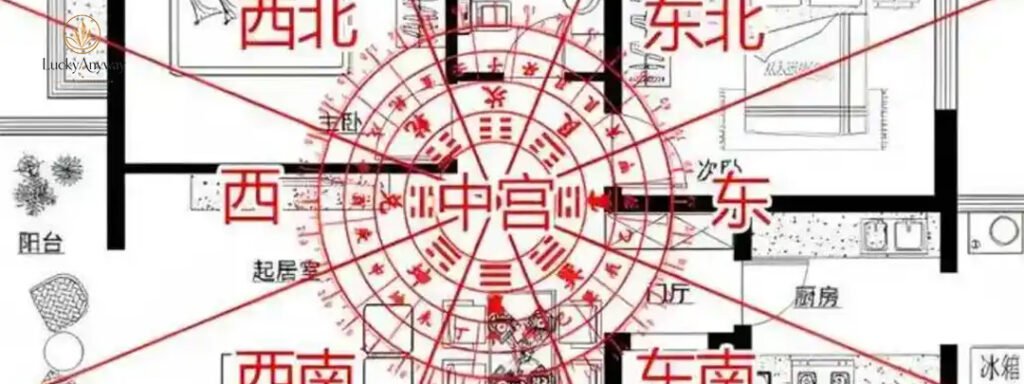
Personal Feng Shui works in everyday life by changing the way you read and arrange the relationship between yourself, your home, your working environment, direction, timing, and personal habits. Traditional practice is not simply about placing objects in certain corners. It begins with the environment, then considers how a person uses that environment. In some cases, BaZi and Five Element principles are added to make the advice more personal. The practical goal is to create a more suitable living pattern while staying within the logic of traditional Chinese Feng Shui.
That distinction matters. A person can buy a Feng Shui object, move a desk, change a bedroom arrangement, or wear a personal Feng Shui bracelet, but none of these actions should be treated as an isolated shortcut. In my experience, the strongest everyday Feng Shui decisions usually start with something much less dramatic: looking carefully at where you live, where you sit, where you sleep, what direction you repeatedly face, and how the surrounding forms interact with your daily routine.
This is where LuckyAnyway approaches personal Feng Shui differently from the simplified advice commonly found online. The traditional system is not a collection of lucky decorations. It is a way of making judgments about environment, form, direction, personal circumstances, and the appropriate response.
What Should You Change First in Everyday Feng Shui?
If you want practical Feng Shui in daily life, start with the places that repeatedly receive your body and attention. Your bed, work chair, entrance, and main living area deserve more attention than a decorative corner that you rarely use.
A common mistake is to search for a single “bad” object before examining the whole setting. Traditional Feng Shui does not normally work that way. A sharp corner may matter, but its position, distance, orientation, surrounding forms, and relationship to the room all affect the judgment. The same physical feature can carry different weight depending on where it sits.
- Check whether your bed has a stable and sensible position rather than placing it simply because a certain direction is popular online.
- Look at what your main entrance faces and what immediately meets the eye when you enter.
- For a work area, consider whether your seat has support behind it and whether movement around you creates unnecessary disturbance.
- Observe external forms such as roads, corners, tall structures, open spaces, walls, and neighboring buildings before buying decorative remedies.
There is a useful professional rule here: fix the strongest environmental issue before adding a symbolic object. If a large external form is clearly dominant, moving a small ornament three inches on a shelf is unlikely to be the first thing I would recommend.
| Daily Area | What to Observe | Common Mistake | Better First Step | When to Look Deeper |
|---|---|---|---|---|
| Entrance | Approach, opening, obstruction, visible forms | Adding objects immediately | Improve clarity and remove obvious blockage | Strong external forms face the entrance |
| Bedroom | Bed position, support, doors, windows | Following one universal direction rule | Judge the room as a complete setting | Individual suitability becomes important |
| Work Area | Seat position, backing, movement, door relationship | Choosing a desk only by direction | Establish a stable working position | Work and personal circumstances conflict |
| Living Room | Movement, openings, dominant shapes | Treating every corner separately | Read the room from its overall pattern | Major forms create obvious pressure or imbalance |
Why Does the Same Feng Shui Advice Not Suit Everyone?
This is one of the biggest differences between traditional practice and simplified internet advice. A room does not exist independently of the person using it, but that does not mean every Feng Shui judgment should begin with the person’s zodiac sign.
Traditional Chinese metaphysics gives practitioners several layers of information. The physical environment may be assessed through form and direction. The individual may be examined through BaZi, including the Day Master, seasonal conditions, strength, structure, useful relationships, and other interactions. These are different lines of judgment. They should not be mixed into one quick formula.
For example, saying that someone “belongs to Fire” and therefore needs red everywhere is not a serious personal Feng Shui method. Nor is telling everyone born in the same zodiac year to face one direction. Those shortcuts are easy to sell because they are easy to explain, but they remove most of the information that makes a traditional reading personal.
When a customer’s situation requires a more individual judgment, this is where a proper BaZi Analysis can become useful. It does not replace the examination of the home. Rather, it can provide another layer when deciding how an individual relates to the environment.
Which Personal Feng Shui Practices Fit a Normal Daily Routine?
Everyday Feng Shui should be usable. If a method requires constant measuring, repeated rearranging, or ten different objects before you can leave the house, it is unlikely to become a sensible long-term practice.
The most practical personal Feng Shui methods usually fall into a few areas: the way you position yourself, the way you maintain your living environment, the directions you repeatedly use, and the personal items you deliberately choose to carry or wear.
- At home: keep important living positions stable and pay attention to the relationship between doors, windows, beds, desks, and major external forms.
- At work: prioritize a stable seat and workable movement pattern before chasing an idealized compass direction.
- When moving: examine the surrounding environment before judging the interior decoration. A beautiful room cannot be separated from the landform and buildings around it.
- In personal accessories: choose materials and Five Element associations with a reason rather than selecting solely by favorite color.
This is also why a Feng Shui lifestyle should not become a constant search for “bad energy.” The traditional approach is more disciplined. Identify what actually deserves attention, make an appropriate adjustment, then stop interfering with the environment unnecessarily.
How Should You Use Personal Feng Shui Methods Without Overdoing Them?
The practical answer is to work from large influences to small ones. First look at the property and the room. Then consider where you spend the most time. Only after that should you decide whether a personal adjustment or accessory has a meaningful place in your routine.
This sequence sounds simple, but it prevents one of the most expensive habits in the modern Feng Shui market: continuously buying new remedies without solving the original problem. A customer may purchase a bracelet, a talisman, a crystal, a mirror, and several decorative items, yet still have the desk positioned badly or the entrance facing an obvious environmental issue.
I generally prefer a smaller number of deliberate choices. If the home is already functioning well from a Feng Shui perspective, there is no reason to turn every room into a display of symbolic objects.
| Practice | Traditional Purpose | Good Use | Poor Use | Practitioner’s Check |
|---|---|---|---|---|
| Room Arrangement | Improve the relationship between people and space | Adjust major furniture first | Constantly moving everything | Is the change solving a real environmental issue? |
| Direction | Consider orientation and spatial relationships | Use when the direction is actually relevant | Treat one direction as universally lucky | What method produced the direction? |
| Five Element Accessory | Apply elemental associations to a personal item | Use after personal factors are considered | Choose only by color or birth year | Why does this element suit this person? |
| Talisman or Symbolic Item | Carry traditional cultural and ritual meaning | Use with a clear traditional purpose | Collect without understanding its tradition | Does the item have a reason within the tradition? |
Does a Personal Feng Shui Bracelet Have a Place in Daily Life?
Yes, but it should be understood as one part of a personal practice rather than a replacement for environmental Feng Shui. A personal Feng Shui bracelet is most meaningful when its material, Five Element associations, and intended use have been considered in relation to the individual.
This is where many online recommendations become too simple. “Wear red for Fire,” “wear black for Water,” or “choose your zodiac bracelet” may be convenient shopping advice, but it is not enough for a serious personal matching process. The same element can have different significance depending on the structure of a person’s BaZi.
At LuckyAnyway, the Five Element Collection is therefore approached as a personalized category rather than a shelf of universally lucky colors. Where an individual matching process is appropriate, the person’s BaZi information can be considered before deciding which elemental combination makes sense.
There is also a practical question of the wearing method. A bracelet should be comfortable enough to become part of normal life. Wear it consistently if that is the intended practice, keep it in good condition, and avoid turning the wearing hand into a rigid superstition unless a particular traditional method gives you a specific reason to do so. There is no advantage in constantly changing sides because of contradictory internet rules.
For readers who want to examine the traditional reasoning behind this kind of personal selection, the Five Element Collection provides a more appropriate starting point than choosing a bracelet solely from a color chart.
When Is Personal Feng Shui Better Than General Feng Shui Advice?
General Feng Shui tips are useful when you are learning how to observe a home. They become less useful when a decision involves several competing factors: a difficult property shape, an important relocation, a major work change, a bedroom or office with limited alternatives, or a personal Five Element question that cannot be answered from the zodiac alone.
At that point, more information usually improves the judgment. A serious personal assessment should consider what the person is actually asking, the physical environment, the relevant directions, and whether BaZi information genuinely adds something to the decision.
This is also where experience matters. Not every problem needs a complicated system. Sometimes the correct answer is simply to change the position of a desk. Sometimes the external form around a house deserves much more attention. And sometimes a personal question really does require a BaZi-based layer before an elemental accessory is selected.
LuckyAnyway’s approach is built around that distinction. You can learn more about the thinking behind the brand through the About page, especially if you want to understand why traditional methods should be applied with judgment rather than reduced to one-line formulas.
Three Questions People Usually Ask Before Starting
Is everyday Feng Shui difficult to practice?
No. The difficult part is not making adjustments; it is knowing which adjustment deserves your attention. Start with the entrance, bedroom, work position, and major surrounding forms. Do not change everything at once.
Do I need my zodiac sign to practice personal Feng Shui?
Not necessarily. The zodiac can provide a traditional reference, but it is not a complete personal analysis. When individual matching is required, a complete BaZi chart provides much richer information than the birth-year animal alone.
Can a personal Feng Shui bracelet be used every day?
Yes. Many people prefer personal accessories precisely because they can become part of an ordinary routine. The important point is to understand why the materials were selected and to treat the bracelet as part of a broader traditional practice, not as a substitute for evaluating the environment.
Good personal Feng Shui is not about making daily life more complicated. It is about becoming more deliberate about the spaces you repeatedly occupy, the directions you repeatedly use, and the personal choices you make within those spaces. Traditional Chinese Feng Shui becomes much more practical when it is treated as a system of judgment rather than a collection of lucky objects.
If you are beginning with everyday Feng Shui, observe first, adjust second, and personalize only when there is a real reason to do so. That simple order prevents many of the mistakes created by simplified online interpretations—and gives personal Feng Shui a much more useful place in ordinary life.