
How to Read Your Home’s Feng Shui: A Simple Guide to Shape, Direction, and Qi
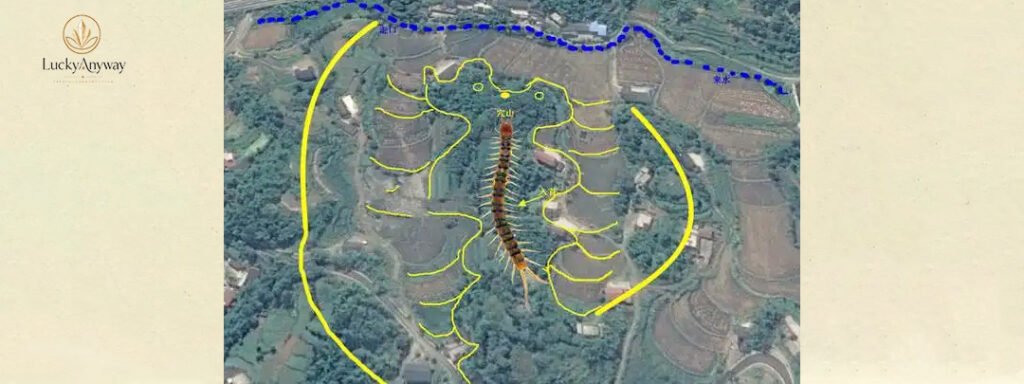
A Practical Way to Understand the Feng Shui of Your Home
To read your home through Feng Shui, start with what is physically in front of you: the shape of the building, the way the surroundings approach it, the main direction, and how movement enters and travels through the space. Only after observing these things should you interpret Qi or choose an adjustment. Traditional home Feng Shui is not simply about placing lucky objects in eight corners. A sound reading moves from form to direction, from direction to Qi, and from Qi to practical adjustment. This order prevents the most common beginner mistake: trying to cure a problem before identifying what the problem actually is.
If you are new to Chinese Feng Shui, that may sound more complicated than the usual online advice.
It is actually simpler.
You do not need to begin with a dozen symbols, a complicated chart, or a house filled with decorative objects.
Begin by looking.
Look at the approach to your front door.
Look at what your windows face.
Look at the shape of your home.
Look at where the major rooms sit.
Then ask what direction these features belong to.
That is the beginning of reading a home.
At LuckyAnyway, this is the principle we keep in mind when discussing traditional Chinese Feng Shui with people who may be encountering it for the first time.
What Should You Look at First in a Feng Shui Home?
Start with form.
This may sound surprising to someone who has seen Feng Shui presented mainly through compass directions, Bagua charts or symbolic objects. But traditional environmental observation begins with the actual physical setting.
Before asking whether the Southeast is favorable, ask a more basic question:
What does the home actually sit inside?
Is the building open or tightly enclosed?
Does a road approach directly toward it?
Is there a large building pressing close to one side?
Are there sharp corners facing the windows?
Is the entrance exposed or protected?
Does the land around the property feel open, blocked, level, elevated or constrained?
These observations belong to the world of Form School Feng Shui. They are especially useful because you can see them without needing complicated calculations.
This is also where Hu Xing He Xiang, or the reading of forms and shapes, becomes interesting. A building, road, wall or landscape feature may have a particular visual character. But an experienced practitioner does not decide that one shape automatically equals one outcome.
The form must be considered in context.
My first rule is simple: never let a Feng Shui chart make you ignore what your eyes can already see.
Why Does the Shape of the Home Matter?
The shape of a home affects how its internal spaces are organized and how its relationship with the surrounding environment is experienced.
A compact rectangular home is different from an L-shaped house.
An L-shaped house is different from a U-shaped property.
A narrow townhouse is different from a detached home surrounded by open land.
These differences are not automatically good or bad.
What matters is how the form behaves.
For example, an irregular floor plan may create what is traditionally described as a missing corner. But a small indentation should not be treated the same way as a major absence in the building footprint.
Likewise, an unusually long corridor may create a very different sense of movement from a compact entrance that opens gradually into a living area.
In traditional terms, this concerns how Qi is able to enter, move and gather.
In practical terms, you are observing the structure of movement.
Where does a person naturally walk?
Where does the eye immediately go?
Where does the space become compressed?
Where does it open up?
These details often tell you more than a generic list of “lucky rooms.”
How Does the Environment Outside Your Home Affect Feng Shui?
A home does not stop at its walls.
The road outside, neighboring buildings, slopes, trees, walls and other structures form part of the environment being considered.
This is one of the strongest differences between traditional Form School thinking and simplified interior Feng Shui.
If a sharp building corner points toward a major window, that external form deserves attention.
If a road approaches aggressively toward the entrance, the entrance deserves attention.
If a large structure sits extremely close to one side of the property, the relationship between the two buildings matters.
You do not need to begin by naming every condition a “Sha.”
First describe it accurately.
What is the object?
Where is it?
How large is it?
What part of the house does it affect?
How close is it?
Does it actually face a significant opening?
This habit is extremely useful because it stops fear from replacing observation.
Traditional Feng Shui has a vocabulary for environmental problems, but the vocabulary should come after the observation—not before it.
How Does Direction Change the Reading of a Home?
Once you understand the physical form, direction gives you another layer of information.
The eight directions—North, Northeast, East, Southeast, South, Southwest, West and Northwest—are associated with the Bagua and its trigrams.
This allows you to ask a more precise question.
Not only “What is happening?” but also “Where is it happening?”
For example, a large opening toward the South is not simply a large opening. In traditional Bagua relationships, the South corresponds to Li and carries associations with Fire, visibility and illumination.
The East corresponds to Zhen and is associated with Wood, movement, growth and family relationships.
The Northwest corresponds to Qian and is traditionally connected with Metal, authority, leadership and the father.
These associations help organize the reading.
But they should not be treated as isolated predictions.
The direction tells you the sector.
The form tells you what is happening there.
The two need to be read together.
What Is the Role of Qi in Reading a Home?
Qi is often translated into English as “energy,” but that translation can create the wrong impression.
In traditional Chinese thought, Qi is a much broader concept related to the vital and dynamic qualities through which natural processes and environments are understood.
For Feng Shui, the practical question is not whether you can see Qi as if it were a physical substance.
The question is how the environment appears to receive, direct, disperse or gather movement.
Consider a front door that opens directly into a long corridor ending at a large rear window.
A simplistic explanation might say, “Qi enters and escapes.”
A more useful observation is that the space creates a strong, uninterrupted line of movement from one opening to another.
That gives you something concrete to work with.
You can consider whether the movement should be softened, redirected or visually moderated.
This is why traditional Feng Shui is often more practical than the word “energy” suggests.
You are studying relationships between space, movement, openings, forms and occupants.
How Should You Read the Main Entrance?
The entrance deserves special attention because it is one of the principal points through which people, movement and environmental influences enter the home.
Do not judge the door only by its color.
Look at the approach.
Is the path clear?
Is the entrance easy to recognize?
Does the door face a direct obstruction?
Does a road or corridor point sharply toward it?
Does the door immediately face another door or a large window?
Is the area around it cramped, dark or cluttered?
These questions are more valuable than asking which decorative item should be placed beside the door.
A clean, functional entrance is often the first practical improvement.
If the physical problem is obvious, correct the physical problem where possible.
Symbolic objects should not become an excuse to leave the actual entrance neglected.
How Do You Read the Interior Movement of Qi?
After the entrance, follow the natural path through the home.
Walk from the front door as if you were a first-time visitor.
Where does your attention go?
Where do you naturally turn?
Where does the space suddenly narrow?
Where does it open?
Where are there doors directly facing each other?
Where are there long straight lines?
Where is the home difficult to move through?
This simple exercise is surprisingly revealing.
A home can have a technically “correct” Bagua arrangement and still have an uncomfortable circulation pattern.
Conversely, an irregular home can sometimes feel remarkably settled because its spaces transition gradually and the environment around it is supportive.
That is why I would never judge a house from a Bagua chart alone.
The chart is a map.
The actual home is the territory.
How Do Shape, Direction and Qi Work Together?
These three ideas should not be treated as separate subjects.
They form a sequence.
| Layer | Main Question | What to Observe | Traditional Reference | Practical Decision |
|---|---|---|---|---|
| Shape | What is physically there? | Building form, roads, walls, corners, openings | Form School | Identify supportive or problematic forms |
| Direction | Where is it located? | North, South, East, West and diagonal sectors | Bagua and trigrams | Understand the sector’s traditional associations |
| Qi | How does movement behave? | Entry, flow, gathering, dispersal and transitions | Traditional environmental theory | Decide whether movement should be moderated |
| Occupants | Who lives here? | Family structure and individual circumstances | Personal and traditional Chinese metaphysics | Separate home concerns from personal concerns |
| Adjustment | What should actually change? | Physical conditions and symbolic choices | Traditional Feng Shui practice | Choose the simplest reasonable response |
This sequence is useful because it prevents you from jumping directly to the final step.
Most people want to begin with “What should I buy?”
A more experienced approach begins with “What am I looking at?”
When Should You Use the Bagua Instead of Only Looking at Shape?
Shape tells you about the physical environment.
The Bagua adds directional relationships.
You need both when the question involves a specific sector of the home.
For example, suppose you notice that one side of your house is substantially recessed.
Shape tells you that there is an irregularity.
Direction tells you whether that irregularity belongs to the East, Southeast, Southwest or another sector.
Only then can you discuss the traditional associations of that sector.
This is the proper order.
Do not decide that an irregularity is a “wealth problem” simply because you saw a chart labeling one direction as wealth-related.
First determine where the irregularity actually is.
Then determine whether it is substantial enough to matter.
Then consider its traditional meaning.
How Do Five Elements Fit Into a Home Feng Shui Reading?
The Five Elements—Wood, Fire, Earth, Metal and Water—provide another traditional layer.
They are associated with directions and trigrams, but they should not be used as a simple color-matching game.
For example, if a sector has a Wood association, it does not automatically mean that filling the room with green plants is always the correct answer.
The condition of the space still matters.
The purpose of the adjustment matters.
And if the object is intended for a particular person rather than the home, personal Five Element considerations may become more relevant.
This is an important distinction for people who are interested in Five Element bracelets and other traditional symbolic products.
A home adjustment and a personal item are not interchangeable.
At LuckyAnyway, we keep these two questions separate rather than presenting one object as a universal answer for every situation.
If your interest is specifically personal rather than architectural, you can explore the BaZi Analysis side before deciding what kind of personal Five Element approach is appropriate.
When Should You Make a Feng Shui Adjustment?
Make an adjustment when you have identified a clear reason for it.
That sounds obvious, but it is one of the most useful rules in practice.
If a large object blocks the entrance, move it.
If clutter prevents a room from being used comfortably, clear it.
If an external form is visually intrusive, consider practical screening where appropriate.
If a room has an awkward circulation pattern, improve the arrangement before adding symbolic objects.
Only after the physical possibilities have been considered should you ask whether a traditional symbolic adjustment has a place.
That might involve a Five Element object, a traditional talisman, a culturally meaningful symbol or another item chosen for a specific reason.
For someone who approaches Feng Shui as a matter of belief and cultural practice, such an object can carry genuine personal meaning.
But meaning is strongest when the reason for using it is understood.
What Should You Not Try to Fix Yourself?
Not every Feng Shui question requires a professional assessment.
Basic observation can take you a long way.
But some situations deserve more caution.
These include complicated floor plans, major renovations, unusual property orientations, strong external forms, multiple missing sectors, or situations where several traditional systems are being considered at once.
Another warning sign is when an online reading gives you a dramatic prediction based on one isolated feature.
Traditional practice should become more careful as the situation becomes more complicated—not more dramatic.
If you are uncertain about what information matters for your particular home, you can contact us before deciding on an adjustment.
What Is the Simplest Way to Read Your Home Today?
You can begin with a ten-minute observation.
- Stand outside. Look toward your home and observe the road, neighboring buildings, walls and major forms.
- Stand at the entrance. Look at what the door faces and how the approach reaches the house.
- Walk inside. Follow the natural movement from the entrance through the main living areas.
- Draw the floor plan. Mark the center and identify the eight directions.
- Check irregularities. Look for substantial missing corners or unusual extensions.
- Observe the sectors. Note what major rooms, openings and external influences occupy them.
- Only then consider adjustments. Start with practical changes before symbolic ones.
You do not need to solve the entire house in one afternoon.
In fact, trying to do so is usually counterproductive.
Choose one issue.
Study it carefully.
Make one sensible change.
Then observe the space again.
What Is the Right Way to Think About Home Feng Shui?
Traditional home Feng Shui is best approached as a method of reading relationships rather than a list of lucky decorations.
Shape tells you what is physically present.
Direction tells you where it belongs.
Qi gives you a way to think about movement, gathering and dispersal.
The Bagua gives directional relationships a traditional framework.
The Five Elements add another layer of traditional correspondence.
And the people living in the house should never disappear from the discussion.
This is also why it is useful to distinguish home Feng Shui from personal Five Element practice. A house has its own physical environment. A person has their own individual circumstances. The two can be considered together, but they should not be confused.
For readers who want to understand the traditional perspective behind LuckyAnyway, you can visit our About Us page.
The most important habit, however, is much simpler.
Look before you buy.
Measure before you interpret.
Understand the form before reaching for a cure.
And never let a single online rule convince you that one corner, one direction or one object controls your entire life.
Feng Shui begins with the environment in front of you.
The better you learn to read that environment, the more meaningful every later decision becomes.