
Metal Element Bracelet: Meaning and Feng Shui
What Does Metal Mean in the Five Elements?
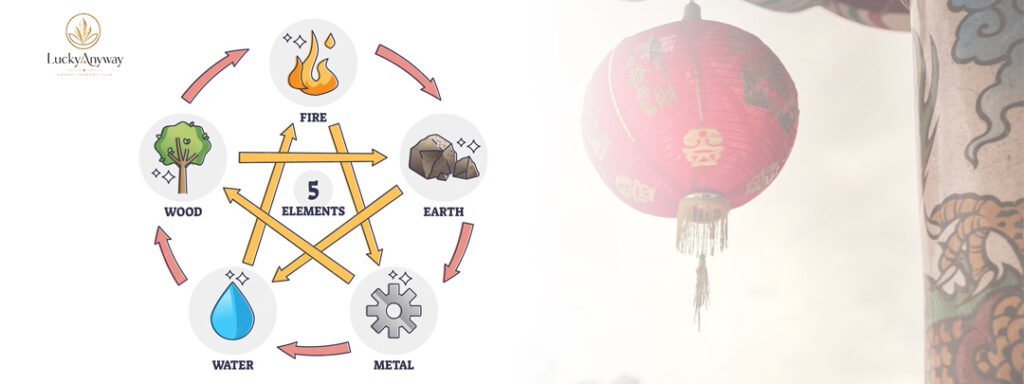
A Metal Element Bracelet is traditionally associated with the Metal phase of the Chinese Five Elements: Wood, Fire, Earth, Metal, and Water. Metal is connected with qualities such as refinement, structure, firmness, order, and the ability to distinguish what should be kept from what should be removed. In traditional practice, however, Metal is not simply a “strong” or “lucky” element. Its usefulness depends on its relationship with the other elements and, for personal applications, on the structure of an individual’s BaZi. A Metal bracelet can therefore be meaningful as a traditional Five Element object, but choosing one for personal use should not be reduced to the rule “I need more Metal.”
This distinction becomes especially important when people search for a metal element bracelet or a metal bracelet feng shui recommendation online. The same Metal material can have a very different role depending on whether it is being considered as a Five Element association, a BaZi adjustment, or part of a Feng Shui arrangement.
In other words, Metal has a traditional meaning, but the meaning of Metal is not the same thing as a prescription to increase Metal.
How Is Metal Different from the Other Four Elements?
The Five Elements are not five isolated substances. They describe a system of relationships and transformations. Metal belongs to the seasonal movement associated with autumn and carries a quality of contraction, refinement, separation, and firmness.
In traditional Chinese thought, Metal is often associated with 义, commonly translated as righteousness, justice, or a sense of proper conduct. This is not simply a personality label. It points toward the quality of making distinctions, maintaining standards, and acting according to principles.
That is why the traditional meaning of Metal is better understood through its function than through a list of personality traits.
Metal can cut Wood. Metal is generated by Earth in the generating cycle. Metal generates Water. Fire controls Metal. These relationships are important because the usefulness of Metal cannot be judged in isolation.
For a bracelet, this means that choosing a Metal element crystal or Metal-associated material is only the physical part of the process. The more important question is what relationship that Metal is supposed to have with the rest of the arrangement.
| Element | Seasonal Association | Traditional Quality | Relationship to Metal | Practical Meaning |
|---|---|---|---|---|
| Wood | Spring | Growth and extension | Metal controls Wood | Metal can represent refinement and restraint |
| Fire | Summer | Heat and illumination | Fire controls Metal | Fire can temper and transform Metal |
| Earth | Transition periods | Center and support | Earth generates Metal | Earth can provide the basis for Metal |
| Metal | Autumn | Refinement and firmness | Self-element | Represents order, distinction, and structure |
| Water | Winter | Depth and movement | Metal generates Water | Metal may serve as a source for Water |
For someone buying Metal Element Jewelry, this is more useful than simply being told that Metal is “powerful.” It tells you why Metal can be helpful in one relationship and excessive in another.
What Is the Traditional Meaning of Metal in BaZi?
In BaZi, Metal is not judged simply by whether it appears in the chart. Its actual condition matters.
A practitioner first identifies the Day Master and then examines the Month Command, the supporting and controlling relationships, the overall strength, seasonal conditions, and the structure of the chart. Metal can represent different Ten Gods depending on the Day Master. For a Wood Day Master, Metal represents Officer and Seven Killings. For a Fire Day Master, Metal represents Wealth. For an Earth Day Master, Metal represents Output. For a Metal Day Master, Metal represents the same element. For a Water Day Master, Metal represents Resource.
This is a major reason why the phrase “Metal element bracelet” cannot be treated as a universal personal recommendation.
The same Metal bracelet can carry a completely different BaZi meaning for five different Day Masters.
And even within one Day Master category, strength and seasonal conditions can change the judgment.
| BaZi Factor | What the Practitioner Examines | Why Metal May Matter | Simplified Online Mistake | Better Judgment |
|---|---|---|---|---|
| Day Master | The relationship between Metal and the Day Master | Metal takes a different Ten Gods role for each Day Master | “Metal is my element” | Determine Metal’s actual role |
| Month Command | Seasonal strength and environment | Autumn Metal differs from Metal appearing in another season | Ignoring the month | Judge Metal within the seasonal setting |
| Strength | Support, competition, draining, and control | Shows whether Metal is excessive, insufficient, or useful | Counting Metal characters only | Judge the whole structure |
| 調候 | Cold, heat, dryness, and moisture | Metal behaves differently under different seasonal conditions | Treating every Metal as identical | Consider climate before making a material choice |
| 喜忌 / 用神 | Whether Metal helps the structure | Determines whether Metal is appropriate to emphasize | “Metal is missing, so Metal is needed” | Follow the structural judgment |
This is where experienced practice separates itself from a color chart. If Metal is useful, the question becomes how to introduce it. If Metal is not useful in excess, adding a heavily Metal-dominant bracelet simply because the customer likes white or silver may be the wrong direction.
How Should Metal Be Understood in Feng Shui?
Feng Shui and BaZi overlap in their use of the Five Elements, but they are not the same discipline.
In Feng Shui, Metal can be considered through the Five Element relationships of a space, together with direction, form, environmental conditions, and the specific school or method being used. In a home or workspace, the question is not simply whether the owner “lacks Metal.” The environment itself has its own configuration.
This is why the phrase metal feng shui bracelet needs some caution. A bracelet is a personal object. Feng Shui traditionally deals strongly with the relationship between people, buildings, spaces, directions, forms, and environmental qi. A bracelet may carry a Metal association, but it should not be presented as though wearing Metal automatically resolves every Feng Shui issue in a home.
That distinction is especially useful for customers who have already received conflicting advice. If someone tells you that you need Metal because a certain room is missing Metal, ask what Feng Shui method was used to reach that conclusion.
Form, direction, surrounding environment, and the actual problem being addressed should come before the bracelet.
What Is the Difference Between a Metal Five Element Bracelet and a Metal Feng Shui Bracelet?
The names sound similar because both may use Metal-associated materials. Their starting points, however, can be different.
| Concept | Starting Point | Main Question | Typical Personalization | What to Avoid |
|---|---|---|---|---|
| Metal Element Bracelet | Five Element theory | What role should Metal play? | Material and elemental arrangement | Assuming Metal should always be increased |
| Metal Five Element Bracelet | BaZi or Five Element matching | How does Metal relate to this person’s chart? | Crystals, colors, engraved elements, supporting materials | Using birth-year element alone |
| Metal Feng Shui Bracelet | Feng Shui context | What role does Metal have within the intended Feng Shui arrangement? | Material, symbolic form, and contextual Five Element association | Treating a bracelet as a substitute for environmental analysis |
| Generic Metal Jewelry | Appearance or fashion | Does the wearer like the material? | Usually aesthetic | Confusing material appearance with traditional practice |
| Chinese Metal Element Bracelet | Chinese Five Element tradition | What traditional meaning does the Metal association carry? | Materials, symbolic elements, and traditional associations | Reducing the tradition to a single “lucky color” |
In practical purchasing terms, this distinction matters. If you want a bracelet connected with your personal BaZi, ask for a BaZi-based Five Element judgment. If your interest is specifically Feng Shui, explain the context rather than simply requesting “more Metal.”
What Does a Metal Element Crystal Represent?
A Metal element crystal is generally selected because of its traditional association with Metal rather than because the crystal is physically made of metal.
White, silver, metallic, and certain light-colored materials are commonly used to express Metal symbolism. White crystal, for example, can be incorporated into a Five Element arrangement when its traditional association fits the intended direction.
But material selection should not become a shopping game in which every white stone is automatically treated as a personal Metal remedy.
Experienced matching pays attention to the role of the material within the complete bracelet. A Metal-associated crystal may be the principal material, a supporting material, or part of a more complex arrangement involving Earth or Water. Those choices should follow the traditional judgment rather than the appearance of the finished bracelet.
This is particularly relevant for a metal crystal bracelet. The phrase tells you the dominant traditional association, but it does not tell you whether that association is personally appropriate.
Insight: A professionally considered Metal bracelet is not defined by how “Metal-like” it looks. The more important question is whether the Metal association has a clear role in the overall Five Element arrangement. Sometimes Metal should be prominent; sometimes it should be supported rather than emphasized.
Should a Metal Day Master Wear More Metal?
This is one of the most common mistakes.
A Metal Day Master is already a person whose Day Stem belongs to Metal. That does not establish that more Metal is required.
If the Day Master is already strong and receives substantial support from the chart, adding additional Metal may not be the most useful direction. If the Day Master is weak and the overall structure calls for support, the judgment can be different. Seasonal conditions also matter.
Take autumn as an obvious example. Metal has seasonal strength during autumn, but that does not mean every Metal Day Master born in autumn should simply wear more Metal. The rest of the chart still determines the relationship.
This is exactly why a metal five element bracelet should not be sold as a universal product for every Metal Day Master. The category can be useful, but the final material arrangement should remain personal.
Customers who want to understand this distinction more deeply can start with LuckyAnyway’s BaZi Analysis approach, where the Day Master is considered within the complete chart rather than treated as an isolated label.
When Does a Metal Element Bracelet Make Sense?
A Metal Element Bracelet makes the most sense when the wearer has a clear reason for choosing Metal within a traditional Five Element framework.
That may mean the person is working from a BaZi analysis in which Metal has a relevant role. It may also mean they specifically want a personal object carrying the traditional qualities associated with Metal: refinement, order, firmness, distinction, and disciplined movement.
For a customer purchasing a Chinese Metal Element Bracelet, these are two different reasons and should not be confused.
If the purpose is personal BaZi matching, the bracelet should be assessed from the chart. If the purpose is cultural or symbolic, the traditional meaning of Metal can guide the design without pretending that the wearer has a specific BaZi requirement.
This distinction creates a much more honest purchasing conversation. You know what the bracelet is being selected for, and the maker knows what kind of arrangement to build.
How Can a Metal Bracelet Be Personalized?
Personalization does not necessarily mean adding more Metal.
A custom bracelet may use Metal as the main association while introducing another element as support. White crystal can be used as a foundation, while another crystal may be selected according to the person’s BaZi needs. An engraved crystal can also incorporate a relevant Heavenly Stem or Earthly Branch, depending on the traditional judgment.
In some cases, the bracelet can take relationships such as 三合 or 六合 into consideration when those relationships are relevant to the chart. The purpose is to create a coherent arrangement rather than a collection of individually “lucky” objects.
This is the approach behind the Five Element Collection at LuckyAnyway. The five Day Master categories provide a practical starting point, while the actual pairing can be discussed according to the individual BaZi rather than being reduced to a fixed formula.
The difference may seem small when you first look at a finished bracelet. It is significant when you ask why each material was chosen.
What Should You Check Before Buying Metal Element Jewelry?
Before purchasing, ask three simple questions.
- Is the bracelet based on Five Element theory, BaZi, Feng Shui, or simply general symbolism?
- If it is personalized, what information was actually used to make the selection?
- Can the maker explain why Metal was chosen and how the other materials relate to it?
If the answer is simply “because your zodiac sign belongs to Metal,” you are dealing with a very broad interpretation.
If the answer involves the Day Master, Month Command, strength, seasonal conditions, structure, and the role of Metal within the chart, you are dealing with a substantially more individual approach.
That difference is worth understanding before you spend money on a custom bracelet.
For a broader view of how LuckyAnyway approaches Chinese traditional culture and its product philosophy, the About Us page provides useful context. The aim is to connect traditional reasoning with a finished object rather than attach a traditional label to a product after it has already been designed.
Frequently Asked Questions
What is the meaning of a Metal Element Bracelet?
A Metal Element Bracelet represents the Metal phase of the traditional Chinese Five Elements and is associated with qualities such as refinement, firmness, order, distinction, and structure. When used for personal Five Element or BaZi matching, its meaning becomes more specific because the role of Metal is judged according to the individual’s chart.
Is a Metal bracelet good for a Metal Day Master?
Not automatically. A Metal Day Master does not necessarily need additional Metal. The Day Master must be considered together with Month Command, strength, seasonal conditions, structure, and favorable or unfavorable elemental relationships. The correct decision may involve Metal, supporting elements, or a combination rather than simply increasing Metal.
Is a Metal Element Bracelet the same as a Feng Shui Bracelet?
Not exactly. A Metal Element Bracelet may be based primarily on Five Element or BaZi considerations, while a Feng Shui Bracelet is understood within a broader Feng Shui context. They can overlap in materials and symbolism, but personal BaZi matching and environmental Feng Shui are different starting points.
Metal Is a Relationship, Not Just a Material
The easiest way to misunderstand Metal is to treat it as a color, a crystal, or a piece of jewelry.
Traditional Five Element practice gives Metal a much broader role. It represents refinement, distinction, firmness, and the movement associated with autumn. Within the generating and controlling relationships, Metal connects with Earth, Water, Wood, and Fire in specific ways. Within BaZi, its meaning changes according to the Day Master and the structure of the chart. Within Feng Shui, its application depends on the environment and the method being used.
That is why a Metal Element Bracelet should not be selected simply because someone says you “need Metal.” The useful question is more precise: What role should Metal play here?
Once that question is answered properly, choosing the material becomes much easier. A Metal element crystal, white crystal, engraved element, or supporting material can then be selected for a reason rather than because it happens to match a popular online recommendation.
For people who value Chinese traditional practice and want a personal object connected with the Five Elements, that difference matters. The bracelet is the finished expression. The judgment behind it is what gives the combination its traditional meaning.
LuckyAnyway’s approach begins from that principle: understand the traditional framework first, then decide what belongs in the bracelet.
Explore LuckyAnyway to see how this approach connects Chinese traditional culture with personalized Five Element products.