
How Does a Five Element Bracelet Work?
How Does a Five Element Bracelet Work?
A Five Element Bracelet is traditionally understood as a wearable arrangement of materials associated with Wood, Fire, Earth, Metal, and Water. Its purpose is not simply to place all five elements on the wrist. In traditional Chinese practice, the more important question is which qualities are appropriate for a particular person and how those qualities relate to the person’s BaZi. A personalized Five Element Bracelet therefore begins with the Four Pillars, Day Master, season, strength, climate, structure, and favorable elements before materials and crystals are selected. The bracelet becomes a practical way of carrying an intentional Five Element arrangement in daily life rather than choosing a bracelet merely because its color or zodiac association appears attractive.
This is why two people can both wear a Chinese Five Element Bracelet while receiving completely different combinations. Traditional practice does not treat Five Element balance as an equal 20 percent of Wood, Fire, Earth, Metal, and Water. What matters is the relationship between the elements within a specific BaZi structure.
At LuckyAnyway, this distinction is central to how personalized Five Element products are approached. The starting point may be the Day Master, but the final arrangement requires a broader judgment of the chart.
What Actually Determines How a Five Element Bracelet Works?
The first mistake many people make is assuming that a bracelet works because it contains all five elements. That is the simplified version of Five Element theory. Traditional BaZi analysis is more precise.
A practitioner first examines the Four Pillars and identifies the Day Master. The Month Branch establishes the seasonal environment, while the surrounding Heavenly Stems and Earthly Branches reveal the relationships supporting, draining, controlling, or transforming the Day Master. From there, strength, seasonal climate, structure, and favorable or unfavorable influences are considered together.
This matters because an element can be present without being useful. Another element may appear relatively limited yet become important because it resolves an imbalance within the overall structure. In some charts, strengthening an already dominant element can make the arrangement less suitable rather than more harmonious.
For this reason, the traditional question is not:
“Which element am I missing?”
The better question is:
“Given the structure of this BaZi, which Five Element qualities are appropriate, and in what way should they be introduced?”
That distinction is the foundation of a properly personalized Five Element Bracelet.
The role of the Day Master
The Day Master is the reference point of BaZi analysis. It represents the Heavenly Stem of the Day Pillar and provides the basis for examining the relationship between the individual and the rest of the chart.
There are five possible Day Master categories: Wood, Fire, Earth, Metal, and Water. This is why a product collection may be organized around five Day Master types. But the label should never be mistaken for the final prescription.
A Metal Day Master, for example, does not automatically require more Metal. If the chart already contains strong Metal and supportive Earth, adding more of the same quality may not be the most appropriate direction. The practitioner must examine the entire structure before deciding what type of material should accompany that Day Master.
| Starting Point | What Is Examined | Why It Matters | Common Mistake | Practical Decision |
|---|---|---|---|---|
| Day Master | Wood, Fire, Earth, Metal, or Water | Provides the central reference for the chart | Assuming the same element must be added | Use it as the starting category, not the final answer |
| Month Command | Season and environmental conditions | Shows the seasonal strength and climate of the chart | Ignoring the birth month | Consider seasonal conditions before selecting materials |
| Strength | Support, competition, draining, and control | Shows whether the Day Master is relatively strong or weak | Counting elements mechanically | Judge relationships rather than numbers alone |
| 調候 | Cold, heat, dryness, and moisture | Identifies environmental needs within the chart | Treating it as identical to strength | Consider climate requirements separately |
| 喜忌 / 用神 | Which relationships improve the overall structure | Guides the practical Five Element direction | Using generic zodiac recommendations | Build the bracelet around the chart’s actual needs |
Does Five Element Balance Mean Having All Five Elements?
No. In traditional Chinese Five Element theory, harmony does not mean mathematical equality.
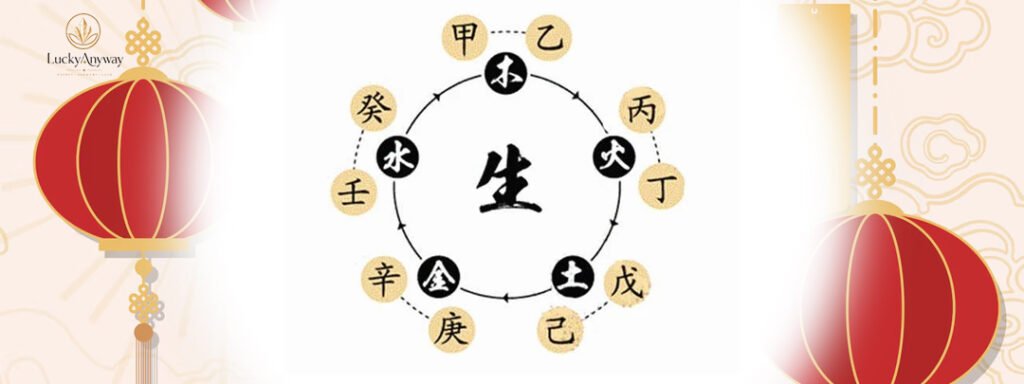
Wood, Fire, Earth, Metal, and Water operate through relationships. They generate one another, control one another, and transform according to circumstances. A BaZi chart may therefore contain a large amount of one element and still require that element in a particular role. Conversely, an element that appears less frequently may not automatically need to be added.
This is one of the most important differences between traditional BaZi-based matching and simplified online “five element calculators.” A calculator may count the visible Heavenly Stems and Earthly Branches and announce that a person has “too little Water.” A practitioner asks what that Water would actually do within the structure.
That is also why the phrase five element harmony should be understood dynamically. Harmony concerns the relationships among the elements, not equal quantities.
Insight: The most useful Five Element Bracelet is not necessarily the one containing the greatest variety of materials. A carefully selected combination can be more meaningful than a bracelet assembled simply to represent all five elements.
Why “missing element” is an unreliable shortcut
Suppose a chart contains very little Water. That fact alone does not establish that Water should be heavily introduced through jewelry. Water may be useful in one structure, while in another it may intensify an existing problem or alter the balance in an unsuitable direction.
The same principle applies to Fire, Earth, Metal, and Wood.
This is why personalized matching should begin with analysis rather than shopping. The bracelet is selected after understanding the chart, not the other way around.
How Are the Five Elements Represented in a Bracelet?
Once the traditional direction has been established, the practitioner can translate it into physical materials. Crystals, stones, colors, engraved elements, and other materials can be selected according to their traditional Five Element associations.
The purpose is not to make the bracelet visually complicated. Good matching often requires restraint. A bracelet may use a principal material and one or two supporting elements rather than forcing every possible association into a single design.
| Element | Traditional Association | Typical Quality | Possible Material Direction | Selection Principle |
|---|---|---|---|---|
| Wood | Growth, extension, spring | Development and upward movement | Green-toned or traditionally Wood-associated materials | Use according to the chart’s actual relationship with Wood |
| Fire | Heat, brightness, summer | Warmth, expression, illumination | Red or warm-toned materials | Consider season and climate before adding Fire |
| Earth | Center, stability, transition | Support and containment | Yellow, brown, or Earth-associated materials | Judge whether Earth supports or burdens the structure |
| Metal | Autumn, refinement, firmness | Order, distinction, decisiveness | White, metallic, or Metal-associated materials | Do not assume a Metal Day Master automatically needs more Metal |
| Water | Winter, moisture, depth | Movement, adaptability, intelligence | Blue, black, or Water-associated materials | Consider whether Water nourishes, drains, or changes the structure |
These associations provide a material language for the bracelet. They do not replace BaZi judgment.
How Should You Choose a Personalized Five Element Bracelet?
The most practical way to choose is to separate the process into two stages. First comes the traditional judgment. Second comes the physical design.
The first stage asks what the chart needs. The second asks how that direction can be expressed through a wearable combination that is coherent, comfortable, and suitable for the customer.
| Your Situation | What to Check First | What to Avoid | Better Approach | Best Next Step |
|---|---|---|---|---|
| You know only your zodiac sign | Obtain complete birth information | Choosing from the animal sign alone | Use the complete Four Pillars | Begin with BaZi analysis |
| You know your Day Master | Strength, season, climate, structure | Buying the same element as your Day Master | Treat Day Master as the starting category | Review the complete chart |
| You were told you lack an element | Whether that element is actually favorable | Adding it automatically | Judge its role in the whole structure | Confirm before purchasing |
| You want a more personal bracelet | BaZi direction and material associations | Selecting only by color or appearance | Combine traditional judgment with craftsmanship | Request personalized matching |
| You already own a bracelet | Its materials and intended Five Element associations | Assuming more materials always improve it | Review the existing combination | Adjust only when the reason is clear |
Why Day Master products are useful starting points
A five-category collection makes the first stage easier for customers. Someone can begin with the Wood, Fire, Earth, Metal, or Water Day Master category instead of trying to interpret dozens of unrelated products.
But the category should be treated as an entry point rather than a fixed prescription.
| Day Master | Collection Starting Point | What Still Needs Analysis | Possible Design Direction | Selection Reminder |
|---|---|---|---|---|
| Wood | Wood Day Master Personalized Crystal Bracelet | Strength, season, structure, favorable elements | Wood-related materials with appropriate supporting qualities | Wood Day Master does not automatically mean “add Wood” |
| Fire | Fire Day Master Personalized Crystal Bracelet | Seasonal heat, strength, climate, structure | Fire-associated materials balanced with suitable supporting elements | Check whether more Fire is appropriate |
| Earth | Earth Day Master Personalized Crystal Bracelet | Dryness, moisture, strength, structure | Earth-related materials with context-specific support | Judge Earth within the full seasonal setting |
| Metal | Metal Day Master Personalized Crystal Bracelet | Strength, Earth support, season, Water/Fire relationships | Metal-associated materials plus carefully selected supporting qualities | Strong Metal and weak Metal require different judgment |
| Water | Water Day Master Personalized Crystal Bracelet | Season, strength, Wood/Fire/Earth relationships | Water-associated materials selected within the wider structure | Do not select solely because Water is your Day Master |
For customers who want to understand the reasoning behind their combination, BaZi Analysis provides the natural starting point. The purpose is to understand the chart first and then translate the conclusion into an appropriate physical arrangement.
Advice: If a seller asks only for your zodiac animal or tells you to “wear the element you lack,” pause before purchasing. A meaningful personalized bracelet should have a reason for its material combination.
What Makes a Personalized Bracelet Different from a Generic One?
A generic bracelet usually begins with the product. A personalized Five Element Bracelet begins with the person.
That difference affects almost every decision: the dominant material, supporting materials, color arrangement, engraved element, bead proportions, and sometimes the choice of a particular branch or combination associated with the customer’s chart.
For example, a practitioner may use white crystal as a base and introduce a material associated with a particular Five Element direction. An engraved crystal can also be selected according to a relevant Heavenly Stem or Earthly Branch. In another case, the arrangement may take traditional relationships such as 三合 or 六合 into consideration when appropriate.
The important point is that these choices are not made simply because they sound auspicious. They must fit the reasoning established during the BaZi analysis.
This is where craftsmanship becomes part of the process. Once the traditional direction has been determined, the final bracelet still needs to be wearable, visually coherent, and made from materials that meet the intended quality standard.
You can explore the Five Element Collection to see how the five Day Master categories are organized before discussing a personalized combination.
What Should You Expect from a Five Element Bracelet in Daily Life?
A properly selected bracelet is intended to accompany the wearer as a physical expression of a traditional Five Element arrangement. The value lies in the relationship between the wearer’s BaZi, the chosen elemental direction, the material associations, and the meaning carried through continued use.
In traditional practice, objects associated with a particular purpose are often chosen deliberately rather than randomly. A bracelet can therefore serve as a daily personal item connected with one’s understanding of BaZi and Five Element principles.
This is also why personalization matters. The same bracelet does not carry the same relevance for every person simply because both people share a zodiac sign or a Day Master.
Insight: The real distinction between a personalized Five Element Bracelet and a generic “lucky bracelet” is the reasoning behind the selection. A traditional arrangement begins with an individual chart and ends with a material combination; a generic product often starts and ends with a symbolic label.
Common Mistakes When Choosing a Five Element Bracelet
The most common mistake is choosing by zodiac animal alone. The zodiac branch is only one part of the Four Pillars, while BaZi contains four pillars and eight characters. A complete judgment requires much more information.
The second mistake is counting elements. Numbers can provide useful information, but they cannot replace structural judgment.
The third mistake is assuming that a strong element must always be increased or a weak element must always be increased. Traditional BaZi does not operate on that simple rule.
The fourth mistake is buying several bracelets at once because each one is associated with a different desired outcome. More symbolic associations do not necessarily create a better arrangement. Sometimes the more disciplined choice is the simpler one.
Finally, customers sometimes focus entirely on color. Color can be relevant to Five Element associations, but color should follow the traditional judgment rather than determine it.
Advice: Do not ask only, “Which bracelet is lucky for me?” Ask, “Why was this combination selected for my BaZi?” The second question leads to a much more meaningful consultation and a more appropriate product.
Frequently Asked Questions
Does a Five Element Bracelet need to contain all five elements?
No. Traditional Five Element matching is not based on making Wood, Fire, Earth, Metal, and Water appear in equal amounts. A personalized bracelet may emphasize certain elemental qualities while using other materials as support, depending on the person’s BaZi structure.
Should I wear the element of my Day Master?
Not automatically. Your Day Master is an important starting point, but it does not mean that the same element should simply be added to your bracelet. Strength, Month Command, seasonal climate, structure, and favorable relationships must be considered before deciding what materials are appropriate.
How do I choose a personalized Five Element Bracelet?
Start with complete birth information and a proper BaZi analysis. Once the Day Master, strength, seasonal conditions, structure, and favorable Five Element direction are understood, the material combination can be selected accordingly. If you want to discuss a personalized arrangement, you can also learn more about LuckyAnyway’s approach before contacting the brand.
The Right Bracelet Begins with the Right Judgment
A Five Element Bracelet works within the traditional logic from which it is designed. The bracelet itself is the final physical expression; the real foundation is the judgment behind its combination.
That is why a personalized Five Element Bracelet should not be reduced to a color chart, zodiac recommendation, or five-element counting exercise. The Day Master provides the starting point, but the complete BaZi determines the context. Month Command establishes the seasonal environment. Strength shows the balance of support and pressure. 調候 addresses climate. Structure and 喜忌 help determine which elemental relationships are suitable.
Only after those questions have been considered does it make sense to decide which crystals, colors, engraved elements, or other materials belong together.
For someone who values Chinese traditional culture and wants a personal object connected with Five Element practice, that distinction is important. The purpose is not simply to find a bracelet that looks auspicious. It is to create a considered arrangement with a reason behind every major choice.
To explore the broader philosophy behind the brand and its traditional approach, visit LuckyAnyway. For the physical products, the Five Element Collection provides the five Day Master starting categories, while individual matching can be discussed after the relevant BaZi information is understood.